interview
Interviews with visionaries, founders, policymakers and researchers who live at the intersection of technology, business, human behavior and global society.
Humans are doomed aren't we?. Content Warning.
Yes, humans are doomed. Not in the cartoonish, asteroid-tomorrow sense. Not even necessarily in the "we all die in 50 years" sense. We're doomed in the slow, structural, almost boring way that civilizations usually collapse: by continuing to do exactly what we've always done, only faster and with better tools. We're locked into systems that reward short-term extraction over long-term stability. We optimize for quarterly earnings, dopamine hits, and personal status while externalizing every cost we can (climate, biodiversity, social cohesion, mental health, future generations). The incentives are misaligned at every level—individual, corporate, national, global—and we lack any realistic mechanism to realign them at scale before critical thresholds are crossed. The math doesn't lie: Climate: We're on track for 2.5–3.5°C this century even with current pledges. Multiple tipping elements (AMOC, permafrost, Amazon) are already activating or teetering. Biodiversity: We're in the 6th mass extinction, losing species at 100–1,000× background rate. Soil: Arable topsoil is depleting faster than it forms in most major grain belts. Freshwater: Aquifers in key food-producing regions (India, China, US High Plains, Middle East) are being mined unsustainably. Energy & materials: We're bumping up against geological limits on cheap fossil fuels, rare earths, phosphorus, copper, etc., while population + consumption keep rising. Social: Trust in institutions is collapsing, inequality is at Gilded Age levels in many places, mental health crises are epidemic among young people, birth rates are crashing below replacement in almost every developed country. And the feedback loops are positive: warmer climate → more wildfires → less carbon sink → warmer climate. More inequality → more political extremism → weaker governance → slower response to crises → more inequality. More stress → worse decisions → more stress. We are not missing knowledge. We know what needs to happen. We are missing alignment, coordination, and the willingness to accept short-term pain for long-term survival. So yes. Humans are doomed. Not because we're evil or stupid, but because we're extremely good at doing what evolution optimized us for: compete, consume, reproduce, status-seek, exploit local surpluses, and kick costs downstream. Those traits were adaptive for 300,000 years on a planet with effectively infinite frontier. They are maladaptive when the frontier closes and the bill comes due. The only real counter-argument is that we are also capable of long-term planning, cooperation at massive scale, technological miracles, and moral progress that sometimes outruns our biology. We abolished smallpox, built global supply chains, created the internet, reduced extreme poverty faster than ever before. So perhaps we pull off another miracle. But miracles are not strategy. They are not probability distributions. They are tail events. Right now the central tendency—the most likely outcome given current trajectories—is collapse of industrial civilization this century, followed by a long dark age or extinction. We can still bend the curve. Every year we delay is a year we make the landing harder. But the window is closing fast. So yeah. Doomed? Probably. But "probably" is not "certainly." And in that gap lives everything that still matters. What are you going to do with your piece of the gap? Because that's the only question left that isn't already answered.
By Scott Murray5 days ago in 01
Robert Duvall. AI-Generated.
Few actors in American cinema have built a body of work as steady and respected as Robert Duvall. Across decades, audiences have searched for everything from Robert Duvall movies to questions like “did Robert Duvall die” or “is Robert Duvall still alive.” The curiosity reflects both his longevity and the deep impression he has made on film history. As of today, Robert Duvall is alive. Rumors about “Robert Duvall death,” “Robert Duvall dead,” or “Robert Duvall passed away” surface online from time to time, but there has been no confirmed report of his passing. The persistent searches—“did Robert Duvall pass away,” “how did Robert Duvall die,” or even misspellings like “rober duvall” and “robert duval”—highlight how frequently misinformation can circulate around legendary performers. Early Breakthrough: Boo Radley and the Start of a Career Duvall’s breakthrough role came in the 1962 adaptation of To Kill a Mockingbird. In that film, he portrayed the reclusive Boo Radley, a character who appears only briefly but leaves a profound impact. For many viewers, “Robert Duvall Boo Radley” remains a defining memory of classic American cinema. The subtlety of his performance signaled what would become his trademark: quiet intensity. Unlike actors who rely on overt emotion, Duvall often conveyed depth through restraint. The Godfather and Tom Hagen In 1972, Duvall appeared in The Godfather as Tom Hagen, the loyal consigliere to the Corleone family. Acting alongside Al Pacino and Robert De Niro (in later installments), Duvall helped shape one of the most celebrated films in cinematic history. His portrayal of Tom Hagen balanced calm diplomacy with quiet authority. The role earned him an Academy Award nomination and cemented his place among Hollywood’s elite. Discussions of Robert Duvall filmography almost always begin here. “I Love the Smell of Napalm in the Morning” If The Godfather made him iconic, Apocalypse Now made him unforgettable. As Lieutenant Colonel Bill Kilgore, Duvall delivered the famous line: “I love the smell of napalm in the morning.” The quote remains one of cinema’s most recognized lines. Though his screen time was limited, his presence was magnetic. The performance earned him another Oscar nomination and added to the growing list of memorable Robert Duvall movies. Award-Winning Work in Tender Mercies In 1983, Duvall won the Academy Award for Best Actor for his role in Tender Mercies. Playing a washed-up country singer seeking redemption, he offered a deeply human portrayal of regret and second chances. The film remains one of the most intimate entries in the Robert Duvall movies and TV shows catalog. The Great Santini and Lonesome Dove Another major performance came in The Great Santini, where he portrayed a strict Marine Corps officer struggling with family life. The role earned him critical acclaim and further showcased his ability to embody complex fathers and authority figures. On television, Duvall starred in the acclaimed miniseries Lonesome Dove, based on Larry McMurtry’s novel. His portrayal of Augustus “Gus” McCrae introduced him to a new generation of viewers. The series remains a cornerstone of discussions about Robert Duvall movies and TV shows. Later Roles and Lasting Appeal Duvall continued acting well into his later years. In Secondhand Lions, he appeared alongside Tommy Lee Jones in a heartfelt family adventure. As audiences look up “Robert Duvall last movie,” they find that he has taken on selective projects in recent years, preferring quality over quantity. His careful approach has kept his Robert Duvall filmography consistent and respected. Personal Life: Wife and Family Searches about “Robert Duvall wife,” “Robert Duvall wife age,” and “how old is Robert Duvall’s wife” often lead to his marriage to Luciana Pedraza. The couple married in 2005. Pedraza, sometimes referenced as “Luciana Duvall,” is significantly younger than Duvall, which explains the frequent curiosity about her age. Despite public interest, Duvall has kept much of his private life quiet. Questions such as “Robert Duvall children,” “Robert Duvall kids,” or “Luciana Duvall” reflect that curiosity. Duvall does not have biological children, though he has maintained close family relationships throughout his life. It is also important to clarify that Duvall is not related to Shelley Duvall, despite the shared surname. The similarity has caused confusion over the years. Net Worth and Career Longevity Estimates of Robert Duvall net worth vary, but they generally reflect decades of steady work in film and television. Unlike some celebrities, Duvall has rarely been associated with extravagant headlines. His wealth is tied to a career built on consistency, discipline, and respect for craft. At over nine decades of life, inquiries such as “Robert Duvall age” underscore how long he has remained active. Few actors sustain relevance for so many generations. Addressing the Death Rumors Search engines frequently display questions like “did Robert Duvall passed away today,” “Robert Duvall died,” or “Robert Duvall cause of death.” As of now, those claims are false. There is no verified report confirming “Robert Duvall death.” Such rumors are common for aging public figures. In Duvall’s case, his enduring legacy means that any whisper of news spreads quickly. Reliable sources, including his official film listings such as “Robert Duvall IMDb,” confirm that he remains alive. A Legacy of Quiet Strength What defines Duvall’s career is not spectacle but subtlety. Whether portraying Tom Hagen in The Godfather, Boo Radley in To Kill a Mockingbird, or the unforgettable colonel in Apocalypse Now, he brings authenticity to every role. He has acted alongside giants like Al Pacino and Robert De Niro, yet never seemed overshadowed. Instead, he carved out his own path—steady, deliberate, and enduring. In an era when celebrity often overshadows craft, Robert Duvall stands as a reminder of what disciplined acting can achieve. His performances remain essential viewing for anyone exploring classic American cinema. And for those wondering, “Is Robert Duvall still alive?”—the answer is yes. His legacy, both on screen and in film history, continues to stand strong.
By Saboor Brohi 9 days ago in 01
Maya Hawke. AI-Generated.
In an industry that often defines young performers by their lineage, Maya Hawke has steadily built a career that stands on its own. Actress, singer, and songwriter, she has emerged as one of the most recognizable talents of her generation—balancing independent film work, mainstream television success, and a growing music catalog. While her family background initially drew attention, her artistic choices and performances have shaped her reputation. Early Life and Artistic Roots Born in 1998 in New York City, Maya Hawke is the daughter of actors Uma Thurman and Ethan Hawke. Growing up around film sets and creative environments naturally influenced her interest in the arts. Yet her path was not without challenges. Hawke has spoken publicly about having dyslexia, an experience that shaped her education and encouraged alternative learning environments. She briefly studied acting at the Juilliard School before leaving to pursue professional opportunities—an early decision that signaled her willingness to follow creative momentum rather than conventional routes. Breakthrough with Stranger Things Maya Hawke’s breakthrough came when she joined the cast of Stranger Things in its third season. Her portrayal of Robin Buckley—a witty, quick-thinking ice cream shop employee who becomes entangled in supernatural mysteries—quickly became a fan favorite. Robin stood out for her humor, emotional honesty, and evolving friendship with established characters. Hawke’s performance added new energy to the ensemble, blending comedic timing with vulnerability. The role not only introduced her to a global audience but also demonstrated her ability to hold her own in a widely popular series. Expanding Film Career Beyond television, Hawke has pursued a diverse range of film roles. She appeared in Once Upon a Time in Hollywood, directed by Quentin Tarantino. Though her role was brief, the project placed her within a high-profile ensemble cast and further expanded her industry visibility. She later starred in independent films that explored complex emotional territory. These projects showcased her interest in character-driven storytelling rather than relying solely on commercial franchises. Her performances often carry a quiet intensity, revealing subtle emotional layers rather than dramatic exaggeration. More recently, she lent her voice to the animated film Inside Out 2, broadening her creative portfolio into voice acting. This move reflected both versatility and an openness to varied storytelling formats. A Parallel Career in Music While many actors occasionally explore music, Maya Hawke has treated songwriting as a serious artistic pursuit. She released her debut album, Blush, in 2020, followed by subsequent projects that blended indie folk influences with introspective lyrics. Her music is often described as personal and poetic. Rather than chasing radio trends, Hawke’s songs emphasize storytelling and emotional authenticity. Acoustic arrangements and understated production allow her voice and lyrics to remain central. The dual path of acting and music can be demanding, yet Hawke has expressed that each discipline informs the other. Acting sharpens her emotional awareness, while songwriting gives her a space for personal reflection outside scripted narratives. Navigating Public Attention Being the child of two prominent actors inevitably invites scrutiny. Early interviews frequently referenced her parents, but Hawke has consistently redirected focus toward her own creative work. Over time, audiences and critics alike have shifted their attention to her performances rather than her lineage. Her public presence tends to feel measured and thoughtful. Rather than cultivating controversy or constant visibility, she often emphasizes craft, collaboration, and creative exploration. This approach has helped her maintain a grounded image in an industry that can amplify pressure. Style and Screen Presence Part of Hawke’s appeal lies in her naturalistic performance style. She often portrays characters who feel approachable and emotionally accessible. Whether in dramatic scenes or moments of humor, her expressions and delivery convey sincerity. Visually, she has also become associated with understated fashion choices—often favoring classic silhouettes and soft tones on red carpets. While style coverage is common for rising actors, her aesthetic tends to reflect subtlety rather than spectacle. Themes in Her Work Across both film and music, recurring themes appear in Hawke’s creative choices: Identity and self-discovery Emotional honesty Friendship and loyalty Quiet resilience These themes resonate strongly with younger audiences navigating similar experiences. Her portrayal of Robin in Stranger Things, for instance, offered representation and nuance that many viewers found meaningful. The Balance Between Mainstream and Independent Projects One notable aspect of Hawke’s career is her ability to move between large-scale productions and smaller, intimate films. This balance allows her to maintain visibility while continuing artistic experimentation. The entertainment industry often pressures young actors to remain within commercially safe spaces. Hawke’s willingness to participate in independent cinema suggests a long-term commitment to growth rather than short-term popularity. Looking Ahead As Maya Hawke continues to expand her body of work, her trajectory suggests thoughtful career building rather than rapid overexposure. With each new project—whether on screen or in the recording studio—she deepens her creative range. In an era where public attention can be fleeting, sustainability often depends on authenticity and adaptability. Hawke’s evolving career demonstrates both. While her family background introduced her to audiences, her talent and deliberate choices have defined her path. Ultimately, Maya Hawke represents a new generation of artists comfortable crossing creative boundaries. By balancing acting, music, and independent storytelling, she has crafted an identity that feels distinctly her own—one shaped not only by opportunity, but by intention
By Saboor Brohi 10 days ago in 01
Tumbler Ridge. AI-Generated.
Tumbler Ridge, BC, is a small and scenic community in northeastern British Columbia, Canada. Known for its rugged wilderness, UNESCO Global Geopark status, and close-knit population, Tumbler Ridge has long been associated with natural beauty rather than national headlines. However, in recent times, phrases such as “Tumbler Ridge shooting” and “Tumbler Ridge active shooter” have drawn attention to the town in ways that contrast sharply with its peaceful image.
By Saboor Brohi 15 days ago in 01
What Every Internet User Needs to Know About the New AI Laws and Updates to Digital Privacy in 2026
What Every Internet User Needs to Know About the New AI Laws and Updates to Digital Privacy in 2026 In comparison to just a few years ago, the digital landscape in 2026 looks very different. Artificial intelligence is no longer a new or experimental tool; rather, it is now an essential component of everyday life.
By Farida Kabir16 days ago in 01
Keion White. AI-Generated.
In a league increasingly defined by speed, flexibility, and schematic creativity, players who can adapt to multiple roles often rise faster than expected. Keion White, a defensive lineman for the New England Patriots, represents that modern NFL prototype. His journey to the professional level and his evolving role on the field highlight how versatility and development can be just as valuable as raw talent. While White may not always dominate headlines, his impact is felt in the subtleties of defensive football—pressure, discipline, and adaptability. A Unique Path to the NFL Keion White’s route to the NFL was far from conventional. He began his college career as a tight end before transitioning to the defensive side of the ball. That offensive background gave him a deeper understanding of blocking schemes, leverage, and timing—skills that later became strengths as a pass rusher. After transferring to Georgia Tech, White refined his defensive identity. He showed the ability to line up across the front, contribute against the run, and disrupt plays without relying solely on speed. Scouts took notice not just of his athletic traits, but of his football intelligence and willingness to learn. Drafted for Potential, Not Just Production When the New England Patriots selected Keion White, they were investing in upside and adaptability. Known for valuing players who fit complex defensive systems, the Patriots saw White as someone who could grow into multiple roles rather than being limited to one position. Early in his professional career, White has been used in various alignments—sometimes on the edge, sometimes inside. That flexibility allows defensive coordinators to disguise pressure and create mismatches. While his stat lines may not always jump off the page, his presence often forces offenses to adjust protections. Strength, Technique, and Discipline Physically, Keion White brings an impressive blend of size and power. He uses his hands well at the point of attack and shows discipline in maintaining gap integrity, a trait that often separates reliable defenders from flashy but inconsistent ones. What stands out most is his patience. White doesn’t overcommit on every snap. Instead, he reads the play, reacts with control, and stays within the defensive structure. That approach may not always result in highlight-reel sacks, but it contributes to overall defensive stability. Learning Within a Demanding System Playing in New England comes with a steep learning curve. The Patriots’ defensive schemes demand awareness, communication, and adaptability. For a young player like Keion White, this environment can accelerate development—but only for those willing to put in the work. White has embraced that challenge. Coaches have noted his preparation and openness to coaching, traits that matter deeply in a system built on precision. Over time, that trust can lead to expanded responsibilities and increased snap counts. Measuring Impact Beyond Statistics In today’s NFL, defensive success isn’t always measured by sacks alone. Pressures, edge setting, and forcing quarterbacks off their preferred reads are equally important. Keion White contributes in those areas, often doing the work that doesn’t show up in box scores. As offenses continue to prioritize quick passing games, defenders who can disrupt timing without sacrificing discipline become increasingly valuable. White’s ability to affect plays without freelancing fits well within that evolving defensive philosophy. The Road Ahead Keion White’s career is still unfolding, and his best football likely lies ahead. With continued development in pass-rush technique and experience against elite offensive linemen, he has the tools to become a consistent contributor on the defensive front. His story serves as a reminder that NFL success isn’t always instant. Some players grow into their roles gradually, building trust through reliability and effort. In a league driven by constant change, those players often end up being the ones teams rely on most. Final Thoughts Keion White represents a modern kind of NFL defender—adaptable, disciplined, and quietly effective. While he may not command constant attention, his value lies in doing the right things snap after snap. As the Patriots continue to evolve defensively, White’s versatility and work ethic position him as an important piece of the puzzle. In a sport where details matter, players like Keion White often make the difference long before the spotlight finds them.
By Saboor Brohi 16 days ago in 01
Trump Obama Apes. AI-Generated.
Political discourse in the digital age often moves faster than facts, and few figures generate as much online reaction as Donald Trump and Barack Obama. Recently, searches involving the phrase “trump obama apes” have surged, largely driven by viral content, screenshots, and debates surrounding posts allegedly shared or amplified on Truth Social. The moment highlights how political messaging, interpretation, and social media outrage intersect in modern Trump news cycles.
By Saboor Brohi 20 days ago in 01
Brad Karp. AI-Generated.
Brad S. Karp is a name that resonates deeply within the world of high‑stakes litigation and corporate law. For decades, Karp has been one of the most influential lawyers in the United States, shaping major legal battles, advising Fortune 100 companies, and leading one of America’s premier law firms — Paul, Weiss, Rifkind, Wharton & Garrison LLP, commonly known as Paul Weiss.
By Saboor Brohi 21 days ago in 01
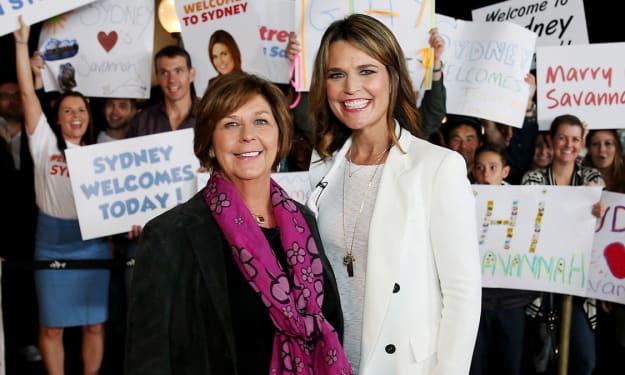
Today’ Show’s Savannah Guthrie Pleads for Safe Return of Missing Mother. AI-Generated.
Savannah Guthrie is known to millions as a steady, composed presence on morning television. As a longtime co-anchor of NBC’s Today show, she has covered countless stories involving crisis, loss, and resilience. Recently, however, Guthrie stepped into a far more personal role, using her public platform to plead for the safe return of a missing mother, a moment that resonated deeply with viewers and highlighted the human side of news. During an emotional appeal, Guthrie addressed the audience not as a journalist, but as a fellow parent and concerned citizen. Her message was direct and heartfelt, emphasizing hope, compassion, and the urgency of bringing a loved one home safely. The plea quickly spread beyond television, drawing attention across social media and news outlets. Cases involving missing persons are tragically common, yet they often struggle to maintain public awareness beyond the first few days. Guthrie’s involvement helped cut through that pattern. By lending her voice and visibility, she reminded audiences that behind every headline is a family waiting for answers. Her appeal focused not on speculation, but on humanity, urging anyone with information to come forward and emphasizing the importance of community support. What made the moment particularly powerful was its simplicity. Guthrie did not sensationalize the situation or attempt to draw conclusions. Instead, she centered the message on safety and empathy, underscoring that the priority was the mother’s well-being. This restraint reflected her background as a journalist, even as she spoke from a place of personal concern. Viewers responded strongly. Many expressed appreciation for Guthrie’s willingness to pause the usual rhythm of morning television to address something deeply serious. Others noted how the appeal reminded them of similar cases that often fade from attention too quickly. The response highlighted how influential public figures can play a constructive role when they use their platforms responsibly. The incident also sparked broader conversations about missing persons coverage. Advocates have long argued that media attention can significantly impact the outcome of such cases, particularly in the early stages. When high-profile voices amplify these stories, they can help mobilize tips, resources, and awareness that might otherwise be lacking. Guthrie’s plea stood out because it avoided the pitfalls that sometimes accompany celebrity involvement. There was no attempt to center herself or dramatize the situation. Instead, she focused squarely on the missing mother and her family, reinforcing the idea that compassion, not attention, was the goal. For Guthrie, the moment was consistent with how she has approached difficult stories throughout her career. She has often spoken about the responsibility that comes with public trust, especially when dealing with vulnerable individuals. In this case, that responsibility extended beyond reporting into advocacy, even if only briefly. The appeal also served as a reminder of the emotional toll such situations take on families. Waiting for news, clinging to hope, and navigating uncertainty can be overwhelming. By speaking directly to viewers, Guthrie helped humanize that experience, making it more than a distant news item. While updates on the situation remain closely followed, Guthrie’s message continues to echo: awareness matters, empathy matters, and community involvement can make a difference. Her plea was not just a call for information, but a reminder that society shares a collective responsibility to look out for one another. In an era where news cycles move quickly and attention is fragmented, moments like this stand out. They show how journalism and humanity can intersect, and how a familiar face can help refocus attention on what truly matters. Savannah Guthrie’s appeal for the safe return of a missing mother was not about ratings or headlines—it was about hope, and the belief that bringing people together can help bring someone home
By Saboor Brohi 21 days ago in 01
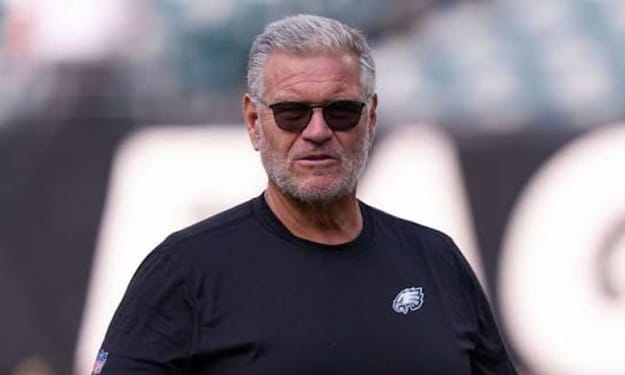
Jeff Stoutland. AI-Generated.
In a league often obsessed with star quarterbacks and flashy skill players, some of the most important figures operate far from the spotlight. For the Philadelphia Eagles, one of those figures is Jeff Stoutland. Known simply as Stoutland inside the building, he has become one of the most respected offensive line coaches in the NFL. His influence is felt every Sunday, even if his name rarely dominates headlines in Eagles news. Jeff Stoutland’s career is a reminder that championships are not built only by highlight-reel moments, but by discipline, consistency, and a relentless focus on fundamentals. Over the years, his work with the Eagles has helped shape one of the league’s most reliable and physically dominant offensive lines. From College Roots to the NFL Before becoming a cornerstone of the Philadelphia Eagles, Jeff Stoutland built his reputation at the college level. He coached offensive linemen at multiple programs, including Michigan State, Miami, and Alabama. His time at Alabama was especially significant, as he worked under Nick Saban during the program’s rise to national dominance. Those college years shaped Stoutland’s coaching philosophy. He learned how to develop raw talent, teach technique with precision, and hold players accountable without breaking confidence. When he transitioned to the NFL, he brought those same principles with him. In 2013, Stoutland joined the Eagles coaching staff, beginning what would become one of the longest and most impactful tenures for any assistant coach in franchise history. Building the Identity of the Stoutland Eagles The phrase “Stoutland Eagles” has become shorthand among fans and analysts for a specific style of football: tough, physical, and disciplined in the trenches. Under Jeff Stoutland, the Eagles’ offensive line has consistently ranked among the best units in the league, regardless of injuries or roster changes. What makes Stoutland special is his ability to develop depth. Star linemen have flourished under his guidance, but just as importantly, backups and late-round draft picks have stepped in seamlessly when needed. This “next man up” mentality has been critical during playoff runs and long, physically demanding seasons. Players often credit Stoutland for his teaching style. He breaks down complex concepts into repeatable habits, emphasizing footwork, hand placement, and mental awareness. The result is an offensive line that plays with confidence and cohesion. A Key Role in Championship Success The Eagles’ Super Bowl victory remains one of the defining moments in franchise history, and Jeff Stoutland played a major role in that success. While quarterbacks and receivers grabbed headlines, the offensive line quietly controlled games, giving the offense balance and flexibility. That championship run solidified Stoutland’s reputation across the league. Despite interest from other teams and opportunities to move into higher-profile roles, he remained committed to the Eagles. His loyalty has been rewarded with organizational trust and a unique level of influence within the coaching staff. In many ways, Stoutland represents the culture the Eagles aim to uphold: hardworking, unselfish, and focused on results rather than recognition. Why Jeff Stoutland Matters More Than Ever In today’s NFL, offensive lines face enormous pressure. Defensive schemes are faster and more complex, and injuries are inevitable over a long season. This is where Jeff Stoutland’s value truly shines. Year after year, the Philadelphia Eagles continue to field an offensive line capable of protecting the quarterback and dominating the run game. That consistency allows the coaching staff to expand the playbook and adapt to different opponents. It also provides stability for younger quarterbacks and skill players as they develop. In recent Eagles news, analysts frequently point to Stoutland’s unit as a competitive advantage. When games tighten in December and January, trench play often determines outcomes, and the Eagles enter those moments with confidence. Respect Across the League Jeff Stoutland’s reputation extends far beyond Philadelphia. Coaches, executives, and former players across the NFL speak highly of his preparation and leadership. While some assistants chase head coaching opportunities, Stoutland has chosen to remain where his impact is greatest. That decision speaks volumes about his priorities. He values mastery of his craft and long-term relationships over titles and media attention. For the Eagles, that stability has been invaluable in an era defined by frequent coaching changes. A Legacy Still Being Written As the Eagles continue to evolve, Jeff Stoutland remains a constant presence. His influence can be seen not only in wins and losses, but in the development of players who leave Philadelphia better than they arrived. Many former Eagles linemen carry his lessons with them throughout their careers. Stoutland’s legacy is not flashy, but it is enduring. He represents the idea that football success is built from the ground up, one rep at a time. In a league driven by stars, he proves that structure and discipline still matter. For fans following Eagles news, Jeff Stoutland may not always be the headline, but his work is impossible to ignore. As long as the Eagles continue to dominate the line of scrimmage, his fingerprints will remain all over the franchise’s success.
By Saboor Brohi 21 days ago in 01