
How Clouds Affect Astronomical Observation
Astronomy depends on one essential requirement: a clear view of the sky. While modern telescopes are incredibly powerful, they still rely on Earth’s atmosphere being transparent enough to allow light from distant objects to pass through. Among all atmospheric conditions, clouds are one of the biggest challenges for astronomical observation.

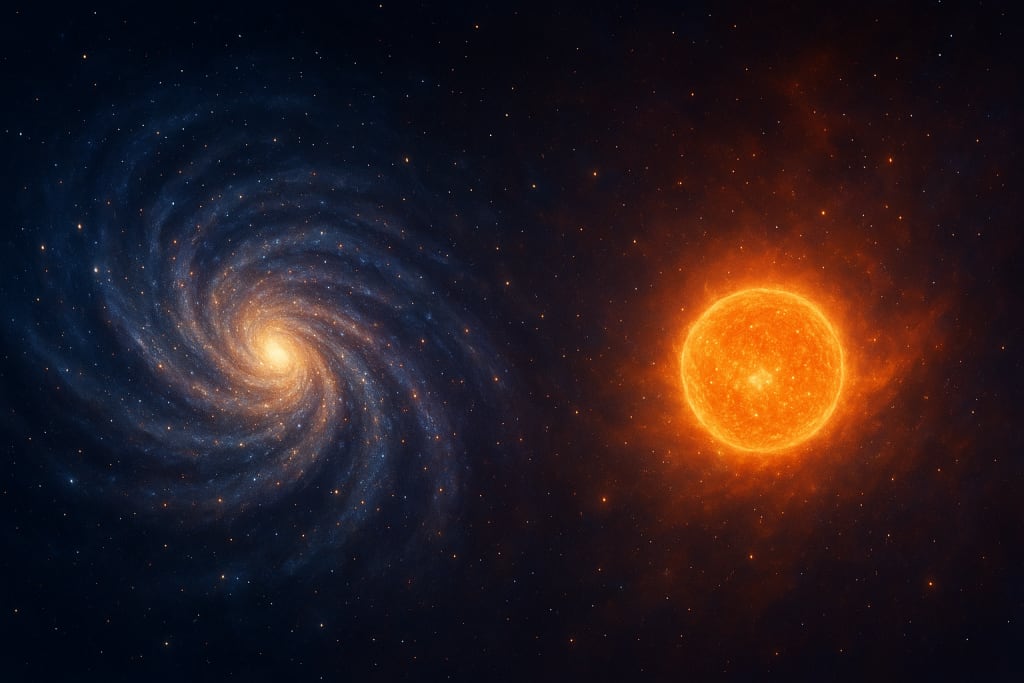
Why Clear Skies Matter in Astronomy
Astronomical observation depends on detecting light from distant celestial objects such as stars, planets, galaxies, and nebulae. These objects emit or reflect electromagnetic radiation that travels across space for years — sometimes millions or billions of years — before reaching Earth.
When that light encounters Earth’s atmosphere, it must pass through layers of gases, dust, moisture, and clouds. Unlike air molecules, which mainly cause slight scattering, clouds are dense collections of water droplets or ice crystals. They block, scatter, and absorb incoming light.
Even thin clouds can significantly reduce visibility, while thick cloud cover can completely obscure the sky.
________________________________________
How Clouds Block and Scatter Light
Clouds affect astronomical observation in two main ways:
1. Absorption of Light
Cloud droplets absorb portions of incoming light, reducing the brightness of celestial objects.
2. Scattering of Light
Cloud particles scatter light in many directions. This scattering reduces contrast and makes faint objects nearly impossible to detect.
The physics behind this involves the interaction of light waves with particles suspended in the atmosphere. The larger the water droplets, the more effective they are at blocking visible light.
Because most ground-based astronomy relies on visible and near-infrared wavelengths, cloud interference severely limits observation.
________________________________________
Types of Clouds and Their Impact on Astronomy
Not all clouds affect astronomical observation equally. Their altitude and thickness determine how disruptive they are.
High-Altitude Cirrus Clouds
Thin cirrus clouds are made of ice crystals. Although they may appear light and wispy, they can:
• Scatter starlight
• Reduce sharpness
• Cause halos around bright objects
Even experienced observers may struggle to detect faint galaxies through cirrus cover.
Mid-Level Clouds
Altostratus and altocumulus clouds create widespread coverage that dims the sky significantly.
Low-Level Clouds
Stratus and cumulonimbus clouds can completely block the sky. These are the most disruptive to astronomy.
For professional observatories, even partial cloud coverage can end an observing session.
________________________________________
Clouds and Light Pollution
Clouds don’t just block starlight — they also reflect artificial light from cities back toward the ground. This increases skyglow and reduces contrast even further.
In urban areas, clouds amplify light pollution by reflecting streetlights, buildings, and vehicle headlights.
The combined effect makes it nearly impossible to see faint stars. This is one reason major observatories are built far from cities.
For example, many leading telescopes are located in dry, remote regions such as Atacama Desert and Mauna Kea, where cloud cover and light pollution are minimal.
________________________________________
Cloud Cover and Professional Observatories
Major observatories carefully select locations based on cloud statistics. Ideal sites offer:
• Low annual cloud coverage
• High altitude
• Stable atmospheric conditions
• Minimal humidity
The European Southern Observatory operates some of its telescopes in Chile’s desert mountains because of exceptionally clear skies.
Similarly, the National Aeronautics and Space Administration monitors cloud cover carefully when planning observations for ground-based instruments.
Clouds directly reduce telescope productivity, which is why site selection is critical.
________________________________________
_________________________________
Clouds and Astrophotography
Astrophotographers are especially sensitive to cloud interference. Long-exposure photography requires stable, clear skies.
Cloud problems in astrophotography include:
• Blurred star trails
• Reduced exposure quality
• Uneven brightness
• Image artifacts
Thin clouds can be particularly frustrating because they may not be visible at first glance but still degrade image clarity.
High-resolution imaging of planets like Jupiter or deep-sky objects like the Andromeda Galaxy requires crystal-clear skies.
________________________________________
Infrared and Radio Astronomy: Are Clouds Still a Problem?
Cloud impact depends on the wavelength being observed.
Visible Light Astronomy
Most affected by clouds.
Infrared Astronomy
Water vapor strongly absorbs infrared radiation. Even thin clouds and humidity severely reduce infrared visibility.
Radio Astronomy
Radio waves can pass through clouds more easily. Observatories like the Atacama Large Millimeter Array operate at high altitudes to minimize atmospheric interference, but radio observations are less sensitive to clouds than optical ones.
Different wavelengths experience different levels of atmospheric interference, but clouds generally reduce clarity across much of the electromagnetic spectrum.
________________________________________
Space Telescopes: Avoiding the Cloud Problem
To eliminate atmospheric interference entirely, astronomers place telescopes in space.
The Hubble Space Telescope operates above Earth’s atmosphere, free from cloud obstruction.
Similarly, the James Webb Space Telescope observes in infrared wavelengths without atmospheric absorption.
By avoiding clouds and atmospheric distortion, space telescopes achieve sharper images and detect fainter objects.
________________________________________
Cloud Forecasting for Astronomers
Modern astronomers rely heavily on weather prediction models.
Observatories use:
• Satellite cloud imaging
• Infrared cloud detection
• Humidity sensors
• All-sky cameras
Even short-term cloud forecasts help astronomers plan observing schedules efficiently.
If clouds are expected, researchers may switch to data analysis instead of observation.
________________________________________
Why High Altitude Matters
Cloud formation is closely linked to atmospheric pressure and moisture. High-altitude sites are often above much of the cloud layer.
For example, observatories on Mauna Kea sit above many low-level clouds. This creates a phenomenon where clouds form below the telescope, leaving clear skies above.
The higher the altitude, the thinner the atmosphere, which reduces both cloud formation and atmospheric distortion.
________________________________________
Seasonal Cloud Patterns
Many regions experience predictable seasonal cloud cycles.
Astronomers must account for:
• Monsoon seasons
• Winter storm systems
• Tropical cloud patterns
• Humidity cycles
Clear-sky statistics determine the long-term productivity of observatory sites.
________________________________________
The Psychological Impact on Amateur Astronomers
For amateur stargazers, clouds are often the biggest frustration.
Planned meteor showers, planetary conjunctions, or eclipses can be completely hidden by cloud cover.
Even the Moon becomes invisible under thick cloud layers.
Unlike professional astronomers who may have access to multiple sites, amateur observers must often wait patiently for clear skies.
________________________________________
Can Technology Overcome Cloud Interference?
Some techniques attempt to reduce cloud effects:
• Adaptive optics correct atmospheric turbulence (but not full cloud cover).
• Image stacking can improve faint signal detection through thin clouds.
• Remote observatories allow observers to access telescopes in clearer regions.
However, no ground-based system can fully penetrate thick cloud cover in visible light.
________________________________________
Why Clouds Remain Astronomy’s Natural Barrier
Despite technological advances, clouds remain a fundamental limitation for ground-based astronomy.
They:
• Block visible light
• Scatter starlight
• Increase sky brightness
• Reduce contrast
• Interrupt long exposures
This is why clear skies are still considered priceless in astronomy.
________________________________________
Conclusion: The Delicate Balance Between Sky and Science
Clouds are essential for Earth’s climate and life, but they pose serious challenges for astronomical observation. By blocking and scattering light, clouds limit visibility, reduce telescope performance, and disrupt both professional and amateur astronomy.
To overcome this challenge, scientists build observatories in remote deserts and high mountains, use advanced forecasting tools, and launch telescopes into space.
Yet even today, one simple truth remains: astronomy depends on clear skies.
When clouds part and the stars shine brightly overhead, astronomers are reminded that sometimes the greatest technology in the world still relies on the cooperation of nature.
About the Creator
Keep reading
More stories from shahkar jalal and writers in Education and other communities.
Why Ancient Monuments Align with Stars
The Human Fascination with the Night Sky Long before modern telescopes, ancient people observed the sky with remarkable attention. The predictable motion of stars, the rising and setting of constellations, and the steady path of the Sun provided reliable patterns in an otherwise uncertain world.
By shahkar jalal16 minutes ago in Education
Building Strong Futures Through Financial Education for Families and Owners
Financial education for families and owners plays a key role in building stable and lasting success. Money decisions affect daily life, long-term goals, and future security. When families and business owners understand how money works, they make better choices. They avoid common mistakes and feel more confident about the future. Financial education for families and owners is not only about numbers. It is about habits, planning, and smart thinking.
By Lee Generous6 days ago in Education
Bridging the Gap: Marketing Clean Technology to Traditional Industries
Marketing clean technology to traditional industries is no longer a niche effort. It is now a major part of business growth. Many factories, farms, energy plants, and transport firms face pressure to cut waste and lower emissions. At the same time, they want to protect profit and stability. This creates both a challenge and an opportunity. Companies that focus on marketing clean technology to traditional industries must speak in clear, simple terms. They must show value, not just vision.
By Gary S Winemaster7 days ago in Education
There's A Hole in My Bucket
It’s a well-known fact that Liza Dufresne was always the brains in the family. She was the one who always came up with the brilliant schemes the Dufresne kids carried out when they were younger. Like when they tricked Mrs. Claybourn into paying for a trip to Disney World. Liza convinced her that their parents had been kidnapped and were being held for ransom for the total price of three tickets. In reality, they were away on a weekend getaway for their anniversary. When they returned, Liza told the Claybourns that they did not like to talk about the ordeal. Their parents never found out how they got the money. Mrs. Claybourn never found out that the Dufresne parents were never really in any danger.
By David E. Perry7 days ago in Fiction


Comments
There are no comments for this story
Be the first to respond and start the conversation.