
Why the Takaful Market Is Set to Soar: A Guide for Investors and Consumers
Driven by the rising global Muslim population and increasing awareness about Islamic finance among individuals.

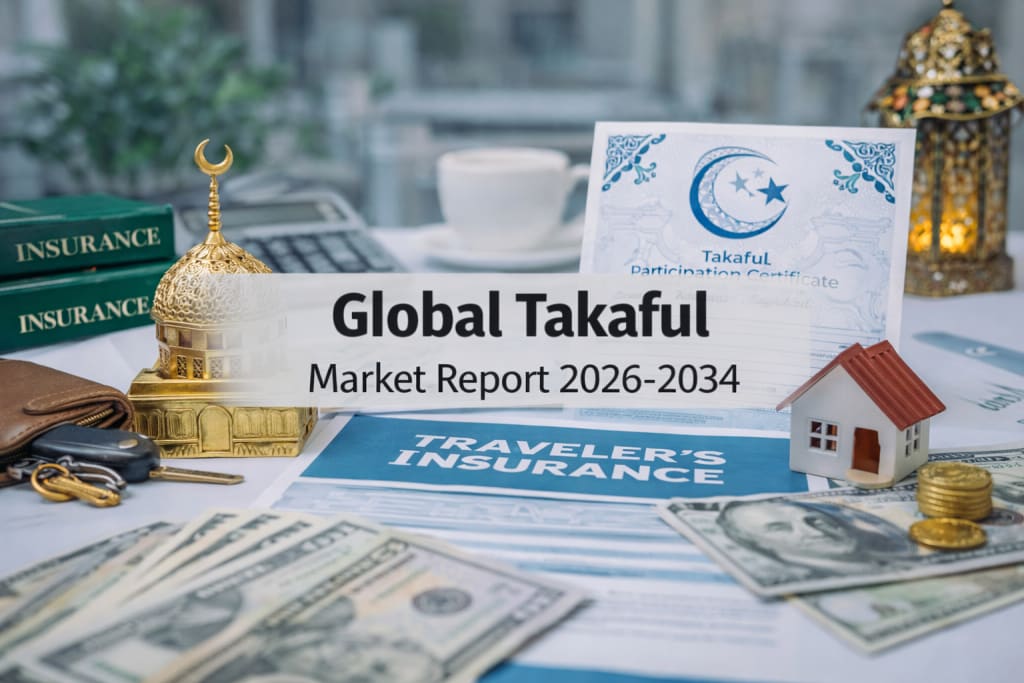
The Rise of Takaful: How Islamic Insurance Is Reshaping Global Finance
For centuries, conventional insurance has operated on a simple promise: pay now, collect later if something goes wrong. But for hundreds of millions of Muslims around the world, that promise comes with a catch — and it has to do with faith.
Enter Takaful. A rapidly growing alternative to conventional insurance, Takaful is built on principles of mutual cooperation, shared responsibility, and ethical finance. And increasingly, it's not just Muslims who are paying attention.
What Is Takaful, and Why Does It Matter?
The word "Takaful" comes from the Arabic root *kafala*, meaning "guaranteeing each other." At its core, Takaful is a system in which participants contribute to a shared pool of funds. When any member faces a loss — a health emergency, a car accident, property damage — they draw from that pool. Any surplus left over is either redistributed to participants or carried forward, rather than kept as profit by a company.
This model is designed to comply with Shariah law, which prohibits three key elements found in conventional insurance: *riba* (interest), *gharar* (excessive uncertainty), and *maysir* (gambling). Critics of traditional insurance have long argued that paying premiums in exchange for an uncertain payout resembles gambling, while the interest-based investment of those premiums violates Islamic finance principles. Takaful sidesteps all three concerns by reframing insurance as a cooperative agreement rather than a commercial transaction.
Get your Sample of Water Treatment Chemicals Market Insights for Free
A Market on the Move
The global Takaful industry has grown from a niche offering into a significant financial sector. Valued at over $30 billion in recent years, the market is projected to surpass $100 billion within the next decade, driven by rising Muslim populations, growing financial literacy, and increasing demand for ethical investment products.
The strongest markets are concentrated in the Gulf Cooperation Council (GCC) countries — Saudi Arabia, UAE, Bahrain, Kuwait, Qatar, and Oman — along with Southeast Asian nations like Malaysia and Indonesia. Malaysia, in particular, has emerged as a global leader in Islamic finance infrastructure, offering a regulatory framework that has made it a model for countries looking to develop their own Takaful sectors.
But the industry's appeal is spreading beyond traditionally Muslim-majority regions. Operators are now launching Takaful products in the United Kingdom, Germany, and parts of sub-Saharan Africa, where demand for ethical and inclusive financial services is on the rise.
Who Is Buying Takaful?
The customer base is broader than many expect. While devout Muslims seeking Shariah-compliant financial products remain the primary market, Takaful is increasingly attracting ethically conscious consumers who appreciate its cooperative, transparent structure — regardless of their religious background.
This is particularly relevant in the growing ESG (Environmental, Social, and Governance) investment space. Takaful products, by design, avoid investments in tobacco, alcohol, weapons, and other industries that conflict with social responsibility standards. That overlap with ESG values positions Takaful as a compelling option for a generation of consumers who want their money to reflect their values.
Small and medium-sized enterprises (SMEs) in Muslim-majority regions are also a key growth driver. As these businesses formalize and seek protection against operational risks, family Takaful (the equivalent of life insurance) and general Takaful (covering property and liability) are becoming essential tools for long-term planning.
Challenges Ahead
Despite its promise, the Takaful industry faces real hurdles. Awareness remains low outside core markets — many potential customers simply do not know the product exists. Regulatory fragmentation across countries means that what counts as Shariah-compliant in one jurisdiction may not be recognized in another, complicating cross-border growth.
There is also the challenge of talent. The industry needs professionals who understand both Islamic jurisprudence and modern actuarial science — a rare combination. Developing that expertise takes time and investment.
Finally, some scholars remain divided on the finer points of Takaful structures, particularly around how operators are compensated and how surpluses are managed. Greater standardization from bodies like the Accounting and Auditing Organization for Islamic Financial Institutions (AAOIFI) will be essential for building global confidence.
The Bigger Picture
Takaful is more than a financial product — it is a statement about what money can be used for and how risk can be shared equitably. As the global conversation around ethical finance deepens, it offers a model that blends ancient principles with modern needs.
Whether you are a business owner, a policy-maker, or simply someone rethinking how your finances align with your values, the rise of Takaful is a story worth following. The market is still young, the opportunities are significant, and the world is watching.
About the Creator
Keep reading
More stories from Frank Morgan and writers in Futurism and other communities.
Digital Twin Market Size to Hit USD 223.6 Billion by 2034 | Driven by Recent Advancements in IoT, AI, and ML Technologies
Industry 4.0 and Smart Manufacturing Driving Global Digital Twin Adoption The global digital twin market is driven by the increase in adoption of Industry 4.0 and smart manufacturing solutions, owing to the need for improved operational and production efficiency and competitive advantage and increasing awareness regarding the benefits of digital transformation and rapid adoption of smart manufacturing solutions among industrial facilities across the globe.
By Frank Morgan13 days ago in Futurism
Double Sided Tape Market Outlook: Industrial Bonding Solutions and Lightweight Manufacturing Growth Opportunities
According to IMARC Group's latest research publication, The global double sided tape market size was valued at USD 12.0 Billion in 2025. Looking forward, IMARC Group estimates the market to reach USD 17.9 Billion by 2034, exhibiting a CAGR of 4.55% during 2026-2034.
By James Whitmana day ago in Futurism
Autonomous Ships Market Trends: Collision Avoidance, AI Control Systems & Industry Forecast to 2033
The growing demand for operational efficiency, a surge in seaborne trade, and a global focus on reducing human-error-related accidents are driving the autonomous ships market. These vessels leverage advanced sensors, artificial intelligence (AI), and automated navigation systems to optimize routes and improve fuel economy. According to IMARC Group’s latest data, the global autonomous ships market size was valued at USD 108.1 Billion in 2024. Looking forward, IMARC Group estimates the market to reach USD 180.3 Billion by 2033, exhibiting a CAGR of 5.56% from 2025-2033.
By Andrew Sullivan2 days ago in Futurism


Comments
There are no comments for this story
Be the first to respond and start the conversation.