
Paging Doctor Amazon!
The Healthcare System Needs Lifesaving Surgery

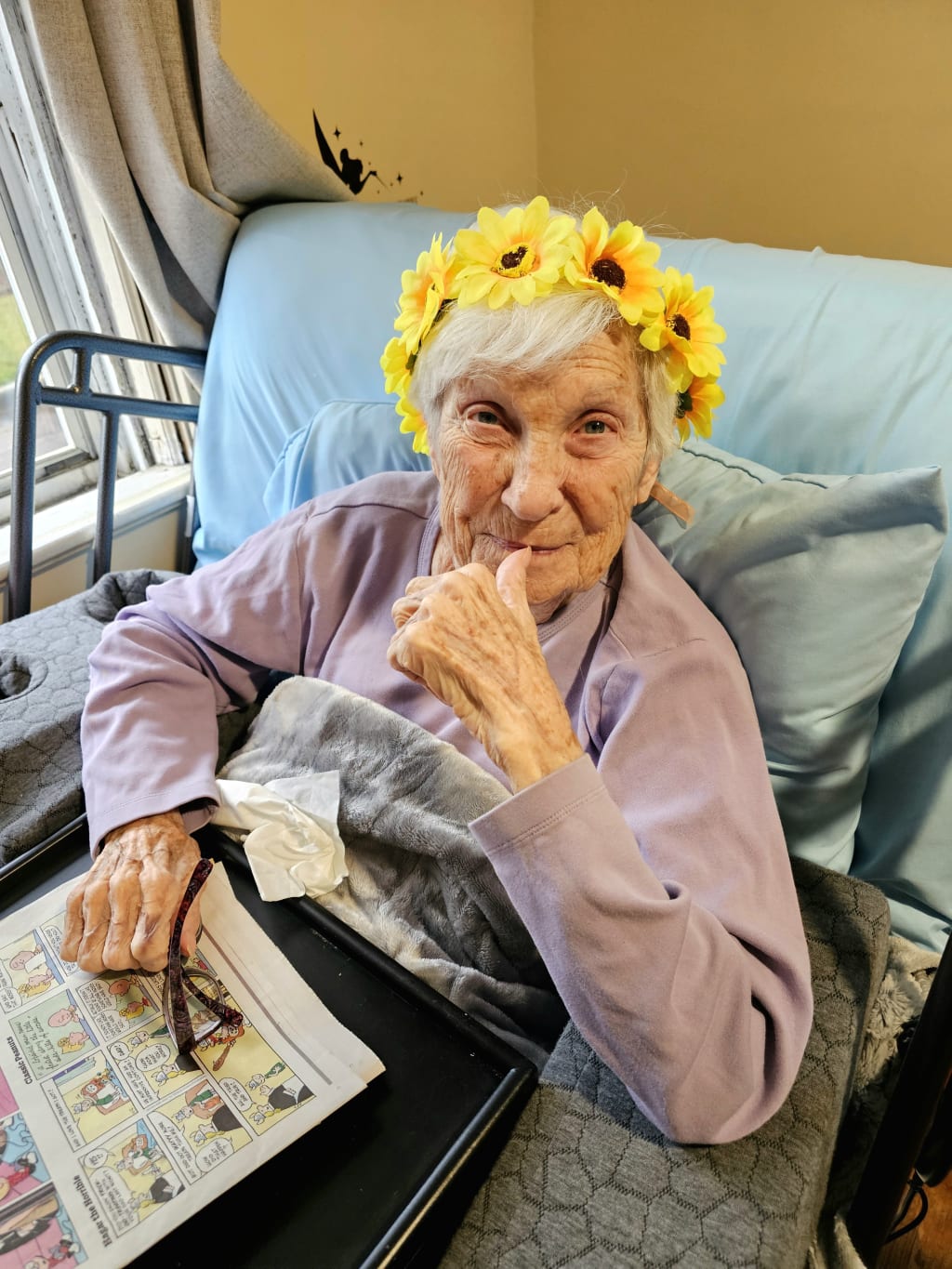
Every trip to the Emergency Room with my mother, age 95, has deepened my appreciation for our undervalued nurses and support staff while confirming how broken the medical system has become. The Trump administration's cut in educational funding that targets nursing and other medical programs is demoralizing female students of color who are starting to drop out of school.
Hospital systems are responding to the shortages by outsourcing non-emergency medical care to virtual visits with non-local doctors and practitioners via an app. It's the Wish version of a house call. Paging Doctor Amazon?
According to the Bureau of Labor Statistics (BLS), nurses now represent over 50% of the health workforce and are critical to the entire U.S. healthcare industry.
My state, Virginia, ranks second among states projected to have the highest registered nursing shortage rates in 2026, with a -30% deficit, and a net deficit of -25,670 RN’s we need but don’t have, and general staffing (32,246 available jobs, accounting for 13% of the state’s total job vacancies according to the Health Resources & Services Administration (HRSA).
Also, Medical/Human Services Managers (over 10,000) and doctors (3,911), of whom 1,622 are primary care providers. We also lack sufficient numbers of nursing assistants, home health aides, and medical assistants.
Living just three blocks from the Old Dominion University campus which partners with Eastern Virginia Medical School (EVMS) means that I am the community Mom and shoulder to cry on for students who come to sit in my fairy garden and find their chill.
Every week for the past month, young black and brown students, mostly female, on a career track in medical, nursing, and related support fields at, as well as engineering, social work, and even technology, have rung my doorbell to say goodbye, ready to end their educations.
“I just don’t think I can keep doing this,” said one black, female Sophomore, who had hoped to become a nurse, but has pivoted to doula, delivering babies. “My parents were both in the Army, my Mom works at the Pentagon, and the government is shut down, so they can’t help me financially. But, mainly, I just don’t see a future for myself or anyone like me in any kind of medicine now. I don't feel like I belong in medicine or higher education now. Why bother when every day we lose more opportunities?”
The Trump administration's actions in late 2025 and early 2026 significantly impacted nursing by proposing to reclassify graduate nursing degrees as non-professional.
That would change how much money students in those programs can borrow, limiting them to $20,500 in federal loans each year, with a lifetime cap of $100,000, which could make those degrees unaffordable and deepen the shortage.
That may hinder roles (like NPs and CRNAs), raising education costs, and reducing faculty for the 80,000+ applicants turned away last year due to teaching staff shortages.
Perception becomes political reality, so let’s talk about how we, as a society, treat nurses and support staff as servants, rather than the “professionals” they are, as they literally do all of the heavy lifting.
When Mom’s in the ER, a scarcity microcosm, I assist as much as the rules allow, lending a hand rather than watching them work.
My mother has been through the Sentara ER three times since Thanksgiving morning 2025, when she suffered three strokes. The other visits were for fallout from hospitalization. Most recently, we lived in the ER for 24 hours after she fainted and had a seizure during a home PT session.
Despite the issues of in-person medical care, I wouldn’t trade the ER/Outpatient system for the allegedly shortage-induced push by medical “corporate” to have her neurology exam, geriatric specialist, PT, and OT taken over by an app with a virtual, non-local provider who can’t hold her hand.
Why? Because my mother, who has vascular dementia and 30-second memory retention, remembers every detail of her new crush, the attending physician who restored her humanity with a laugh.
In the 20th hour of our ER experience, in stepped Dr. Mark Flemmer, Geriatric/Internal Medicine, surrounded by eager residents.
He gave a Master Class, ala Dr. Patch Adams, in diagnostics, humor, and common sense, taking a hands-on, classic approach to get it right. “The trouble with old ladies (wink at Mom) is they have a lot of diseases happening in them, but if we hospitalize them for things we know we cannot reasonably treat to their benefit, we do them more harm than good.”
“OLD LADIES,” cried Mom in mock horror.
She has gallstones that took her appetite, leading to low potassium and other nutritional and hydration issues.
“Discharge her and make sure she gets a banana every day,” Dr. Flemmer said.
Additional medical instructions followed, but my takeaway is that less is more, except when it comes to nurses.
About the Creator
Lisa Suhay
Journalist, Fairy Tree Founder, Op-Ed and children’s book author who has written for the New York Times, Christian Science Monitor, NPR and The Virginian-Pilot. TEDx presenter on chess. YouTube Storytime Video playlist
Keep reading
More stories from Lisa Suhay and writers in Humans and other communities.
Problem-Solving Techniques That Reduce Anxiety And Boost Dating Success
Fears of rejection, judgment, or negative experience are usually the roots of the dating anxiety. The initial step in resolving this issue will involve determining what exactly causes nervousness. There are those who are afraid of uttering the wrong words, and some are afraid of being emotional and vulnerable, or misunderstood. These concerns will be discovered by taking time to reflect by journaling or by self-assessment. Once the cause of the anxiety is understood, then it appears less daunting. Knowing the underlying cause enables people to be more conscious when dating so it becomes easier to come up with viable solutions to solving specific emotional problems.
By Robert Smith2 days ago in Humans



Comments
There are no comments for this story
Be the first to respond and start the conversation.