
Former U.S. F-35 Fighter Pilot Arrested for Training Chinese Air Force
U.S. authorities say the former fighter pilot passed sensitive combat training and tactics to China’s air force, raising fears over the exploitation of Western military expertise.

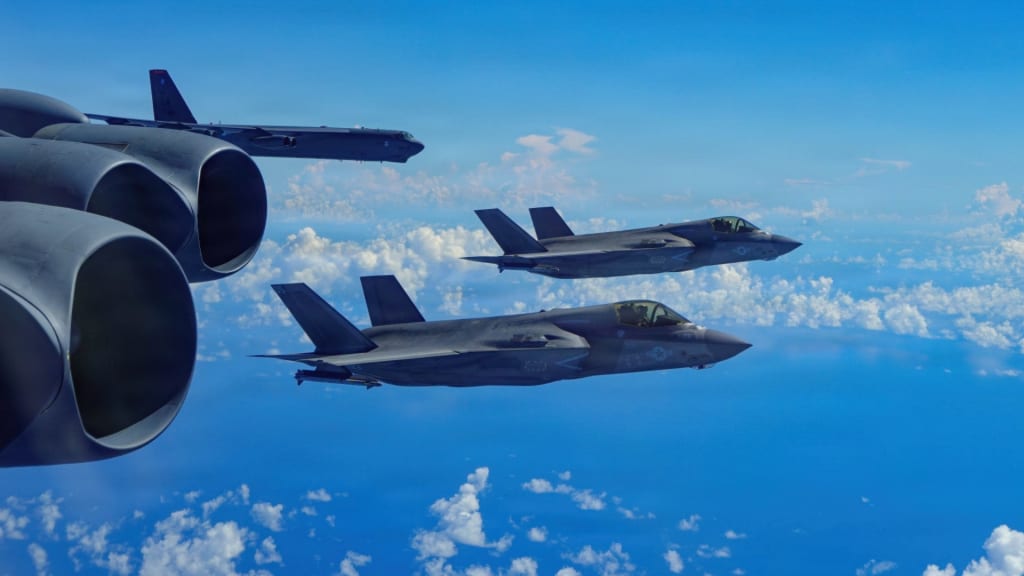
U.S. authorities have arrested a former fighter pilot who once flew the advanced F-35 stealth jet, accusing him of secretly providing military training and tactical guidance to China’s air force in violation of national security laws. The case has sparked alarm within defense circles, highlighting growing concerns over foreign efforts to recruit Western pilots and gain access to sensitive military expertise.
The arrest was announced by officials in the United States, who said the former pilot had traveled abroad and entered into contracts that effectively transferred operational knowledge to the China. Prosecutors allege that the training included aerial combat techniques, operational procedures, and insights into Western fighter tactics that could significantly enhance China’s military readiness.
Allegations of Covert Training
According to court documents, the pilot worked with intermediaries who presented the program as civilian flight instruction but were allegedly linked to the Chinese military. Investigators believe the training sessions were designed to help Chinese pilots understand how U.S. and allied air forces operate, particularly in high-intensity conflict scenarios.
Officials emphasized that the suspect had access to classified or highly sensitive knowledge during his service, making the alleged transfer of expertise especially dangerous. While the exact content of the training remains classified, authorities said it went far beyond basic aviation skills and entered the realm of combat doctrine.
“This was not about teaching someone how to fly,” a senior law enforcement official said. “It was about providing insight into how America fights.”
A Growing Pattern of Recruitment
The case is part of a broader pattern in which China is accused of attempting to recruit retired Western military pilots through private companies or overseas flight schools. In recent years, intelligence agencies in the U.S., Britain, and Australia have warned former service members that lucrative offers to train foreign pilots may carry hidden risks and legal consequences.
Some of these recruitment efforts reportedly operate through shell companies based in third countries, making it difficult for authorities to trace their true sponsors. Payments can reach hundreds of thousands of dollars per year, creating strong financial incentives for retired pilots facing uncertain civilian careers.
Defense analysts say the knowledge gained from such training could help China better prepare for potential encounters with U.S. and allied aircraft in the Pacific region.
Legal and Security Implications
The arrested pilot is expected to face charges under laws that prohibit providing defense services or military training to foreign governments without authorization. Conviction could result in lengthy prison terms and heavy fines.
Officials at the Pentagon said the case underscores the need for stricter oversight of former military personnel who work abroad in aviation-related roles. New guidance is reportedly being considered to clarify what types of post-service employment are permitted and which could pose security risks.
“This is a wake-up call,” said a former U.S. Air Force commander. “Our adversaries are not just stealing technology; they are trying to steal experience.”
Diplomatic Tensions
The incident is likely to add strain to already tense relations between Washington and Beijing. U.S. officials accused China of deliberately seeking to exploit gaps in international law by recruiting foreign experts indirectly rather than through official military channels.
China has not publicly commented on the arrest, but it has previously denied accusations of targeting Western pilots for military purposes, claiming that any foreign instructors are involved only in civilian aviation programs.
Still, the case is expected to feature prominently in future diplomatic discussions on military transparency and espionage.
Broader Strategic Context
The F-35 program represents one of the most advanced fighter platforms in the world, shared among several U.S. allies. Any transfer of tactical knowledge about how such aircraft operate, even without sharing technical blueprints, could provide strategic advantages to rival powers.
Security experts warn that modern warfare increasingly depends on human expertise as much as hardware. Understanding how pilots make decisions in combat, how they coordinate with ground and naval forces, and how they use stealth and sensors can be just as valuable as access to the aircraft itself.
“This isn’t about one pilot,” said a defense analyst. “It’s about protecting an entire ecosystem of knowledge built over decades.”
Looking Ahead
The arrest has renewed calls for tighter monitoring of retired military professionals and stronger international cooperation to prevent the unauthorized sharing of defense expertise. Lawmakers are expected to push for tougher penalties and clearer rules governing post-service employment.
As the case moves through the courts, it serves as a stark reminder that geopolitical rivalry is no longer limited to weapons and technology—it also extends to people, skills, and experience.
About the Creator
Fiaz Ahmed
I am Fiaz Ahmed. I am a passionate writer. I love covering trending topics and breaking news. With a sharp eye for what’s happening around the world, and crafts timely and engaging stories that keep readers informed and updated.
Keep reading
More stories from Fiaz Ahmed and writers in The Swamp and other communities.
Trump Makes Iran Missile, Protest Deaths Claims; Tehran Slams ‘Big Lies’
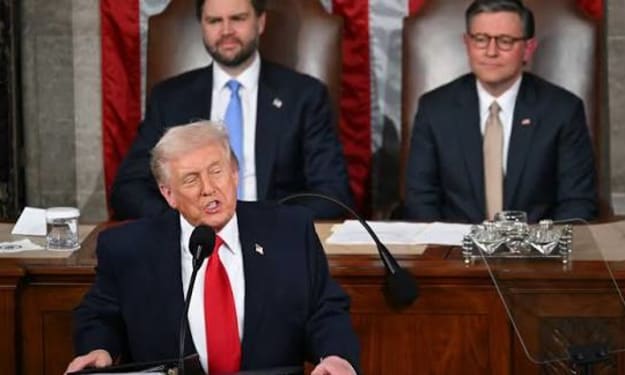
In a contentious moment during his State of the Union address, Donald Trump issued a series of forceful accusations against Iran, asserting that Tehran is pursuing long-range missiles and bears responsibility for thousands of protest deaths — claims Tehran has vehemently rejected as “big lies” amid rising tensions and ongoing diplomatic talks. Trump’s remarks, delivered to a joint session of the U.S. Congress, underscored his administration’s hardline stance toward Iran while warning of continued military readiness if diplomacy does not yield substantial concessions from Tehran. In his record-length speech, Trump said the United States will “never allow” Iran to acquire nuclear weapons and reiterated warnings that Tehran’s leaders are pursuing what he described as “sinister ambitions” in both nuclear and missile capabilities. Accusations of Nuclear and Missile Ambitions At the heart of Trump’s address were allegations that Iran was working to rebuild its nuclear programme and develop ballistic missiles capable of threatening U.S. territory. Trump claimed that after U.S. and Israeli strikes on Iranian nuclear sites in 2025, Tehran continued efforts to resurrect its weapons infrastructure, including developing missiles that could reach the United States and Europe. “We wiped it out and they want to start all over again,” Trump said, describing Iran’s actions as evidence of hostile intent. He also accused Tehran of threatening U.S. allies and interests overseas with long-range missile technology, though independent assessments note that Iran still lacks an operational intercontinental ballistic missile capability and would require years to develop one. Protest Death Toll: Disputed Figures Trump also addressed Iran’s internal unrest, claiming that Iranian authorities were responsible for the deaths of up to 32,000 protesters during antigovernment demonstrations that erupted late last year. Human rights groups and regional observers describe the unrest as one of Iran’s most significant protest movements in years, but figures on fatalities vary widely and are difficult to verify independently. Iran’s own government reported around 3,117 deaths, attributing the violence to “terrorist acts” amid a broader security crackdown, while some human rights organizations report several thousand confirmed fatalities. Trump’s figure far exceeds both the official Iranian count and independent estimates, making it a conspicuous element of his speech. Tehran’s Sharp Rebuttal Iran responded swiftly to Trump’s claims, with the Ministry of Foreign Affairs of Iran dismissing the allegations about missiles, nuclear ambitions, and protest deaths as outright fabrications. Spokesman Esmaeil Baghaei called the accusations “a repetition of ‘big lies’” in a post on the social media platform X, accusing the United States and its allies of disseminating misinformation to justify pressure on Tehran. “Iran has repeatedly denied that it is seeking nuclear weapons or developing missiles aimed at the United States,” Baghaei said, arguing that the claims are part of a broader disinformation campaign. He derided the repeated assertions as propaganda, invoking the idea that repeated falsehoods can create an “illusion of truth.” Diplomacy Amid Escalation Trump’s remarks came just ahead of the third round of indirect nuclear negotiations scheduled to take place in Geneva, mediated by Oman and attended by U.S. envoys and Iranian officials. Despite the heightened rhetoric, U.S. and Iranian delegations have agreed to return to the table, suggesting that diplomacy remains a parallel track even as both sides issue public warnings. The United States has also deployed significant military assets to the Middle East, including carrier strike groups and additional forces intended to signal readiness should diplomatic talks falter. Iranian officials have responded that they seek a deal grounded in mutual respect but warn that any military strike would be met with decisive defensive action. Political Reaction in Washington Trump’s declarations elicited bipartisan reactions in Washington. Supporters applauded his strong posture toward Tehran, arguing that deterrence requires assertive rhetoric and credible threat of force. Critics, including some Democratic lawmakers, questioned the accuracy of the claims presented and urged greater reliance on verifiable intelligence and sustained diplomatic engagement. Regional and Global Impact The exchange between Washington and Tehran has reverberated across the Middle East and beyond, contributing to geopolitical uncertainty and influencing energy markets and regional alliances. Allies and rivals alike are watching closely, with some nations warning their citizens about travel to Iran amid the tensions. As negotiations proceed and allegations continue to fly, the episode highlights both the deep mistrust between the United States and Iran and the complex interplay between military posture and diplomatic efforts. Whether Trump’s rhetoric serves to strengthen negotiating leverage or further entrenches divisions remains a central question in one of the most consequential foreign policy challenges facing both capitals.
By Fiaz Ahmed about 16 hours ago in The Swamp
Why Black History Matters in America?
The United States of America is celebrating their 250th anniversary in 2026. I'm proud to be an American and as someone who was born here, I wouldn't imagine myself living anywhere else. This is a country where opportunities are possible. Where anyone can be successful in anything they desire to do. Equality, community, and togetherness are the backbones of what America is and should be about. However, we have an administration who wants to erase and disregard those who have made positive, meaningful impacts in our country, specifically Black figures, such as Martin Luther King, Jr., Rosa Parks, and Maya Angelou. President Trump and his administration have been constantly complaining and fighting against what they call the "Woke agenda". They use this excuse as a distraction from other issues they refuse to address, such as the high cost of living, climate change, and inflation. That equality is dividing America, when in reality, it's bringing us together. Being woke is not tied to a specific political party. No matter where you stand on the political spectrum, you can still care about other people and their plights. Compassion and empathy for others isn't tied to a political party, either. We were taught as children to treat others the way we want to be treated and not judge others because they're different from us. Caring about others isn't a personal attack on your beliefs. It doesn't make you any less of a person. People who are easily offended over African American figures, past or present, or anything related to it, are grasping at straws. Current and future generations need to know who people like Harriet Tubman and Shirley Chisholm were, especially in the classroom. Black History is part of American History. It should be recognized, not hidden or forgotten. Besides, you can't shield children from everything, just because your feelings are easily hurt.
By Mark Wesley Pritchard 24 days ago in The Swamp
Trickle Them Down, But Not Out
The thing about smart people is that they should know better, but alas, intelligence is not the same as wisdom. Not only do the mistakes of experts too short on vision—when they are not corrected—have the potential to do great and far-reaching damage, but they also undermine public confidence in the very notion of expertise. This is particularly so when expertise is wielded in defence of the rich and powerful as a cudgel against those laid low. As an academic, this lack of faith in “so-called experts” is painful to see as it plays out in the spread of dis-/misinformation, conspiracy theories, and anti-intellectualism writ large. But it is also an understandable impulse given the catastrophic failure of an economic ideology pushed by certain economic experts. Supply-side economics has shaped a broken system for the last half-century and has arguably done more to undermine the fabric of the American Dream than any policy framework of the past century.
By Cory Wright-Maleya day ago in Humans


Comments
There are no comments for this story
Be the first to respond and start the conversation.