
Australia Grain Production Market Set for Steady Growth
Strong export demand, favourable climate and agri-tech innovation are driving Australia’s grain production to nearly 94 million tonnes by 2034.

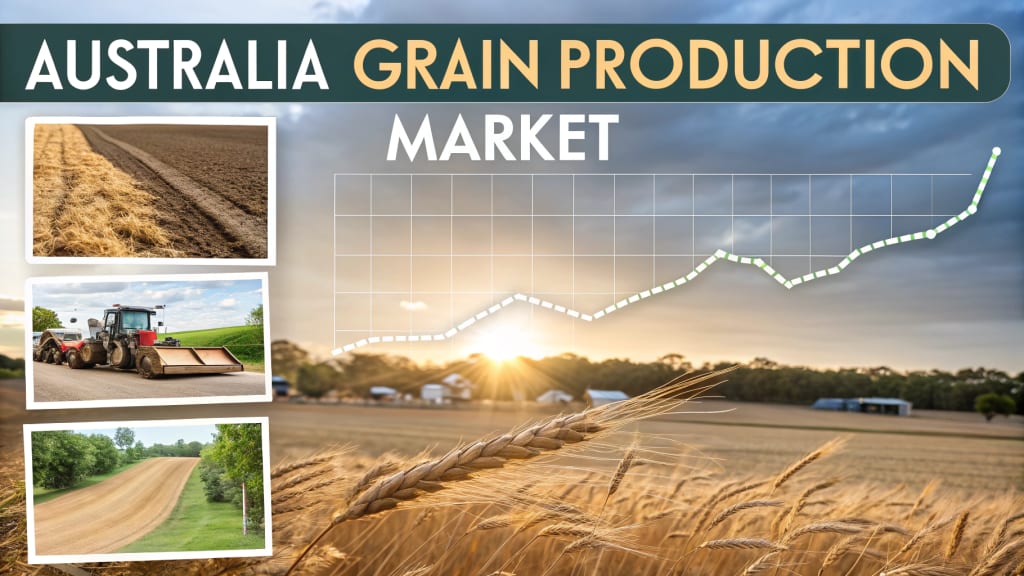
In 2025, the Australia grain production market reached approximately 69.4 Million Tons, with expectations to expand steadily to 94.3 Million Tons by 2034, representing a compound annual growth rate (CAGR) of 3.36% during the 2026–2034 forecast period. This sustained growth reflects Australia’s pivotal role as a key global grain supplier and the continued evolution of production practices that improve yield efficiency and climate resilience.
Australia’s grain production landscape encompasses a diverse mix of crop types — including wheat, barley, canola, pulses and others — each serving domestic needs and export markets. End uses range from food consumption and animal feed to industrial applications, driving stable demand across value chains. Regional production hubs span the Australia Capital Territory & New South Wales, Victoria & Tasmania, Queensland, Northern Territory & Southern Australia and Western Australia.
Why the Market Is Growing So Rapidly
1. Favourable Climatic Conditions:
Australia benefits from diversified climatic zones that support year-round grain cultivation. Periods of timely rainfall and moderate temperatures have historically boosted crop output across major grain belts. While climate variability — including El Niño and La Niña effects — presents challenges, favourable growing seasons can significantly lift yields, as evidenced by recent harvest volume increases and government-adjusted forecasts.
2. Strong Export Demand:
Australia’s grain production isn’t just for local consumption — it’s a cornerstone of global food supply. Proximity to major Asian markets, supported by trade agreements and established logistics infrastructure, ensures consistent international demand, particularly for wheat, barley and canola. Export momentum reinforces production growth and supports stable pricing for growers.
3. Government Support and Policy Initiatives:
National and state-level agricultural policies have actively promoted production resilience and export capacity. Support ranges from research funding and infrastructure upgrades to market access facilitation efforts, helping the sector maintain competitiveness on the global stage and at home.
4. Technological Innovation in Agriculture:
Advances in farming practices — from precision agriculture and advanced irrigation systems to improved crop genetics — are enhancing resource efficiency and yield potential. Digital tools such as soil sensors, drones and data analytics enable farmers to optimise planting schedules, irrigation and fertilisation with greater accuracy, thereby reducing waste and improving output consistency.
5. Supply Chain Improvements:
Investment in storage, transport and handling infrastructure strengthens Australia’s ability to move grain efficiently from farm to port. As supply chain bottlenecks diminish, producers are better equipped to access domestic and international markets, which in turn supports production planning and long-term investment decisions.
What the Opportunities Are
1. Precision Agriculture Technologies:
Adoption of AI-enabled and sensor-based tools can further enhance yield prediction and resource use efficiency, creating opportunities for tech firms and agri-service providers.
2. Expansion of Export Infrastructure:
Investments in port terminals, rail and road networks will deepen export capacity, accommodate larger bulk shipments and reduce logistical costs, benefitting both producers and export partners.
3. Climate-Resilient Crop Varieties:
Development and commercialisation of drought-tolerant and climate-adaptive grain breeds can buffer production volatility and open new cultivation frontiers, particularly in marginal areas.
4. Value-Added Grain Products:
Processing grains into higher-value derivatives — such as specialty flours, oils and protein concentrates — can capture additional revenue streams and diversify market risk.
5. Digital Supply Chain Platforms:
Blockchain and data integration solutions that improve traceability and quality assurance offer value to buyers and enhance market transparency.
6. Sustainable Farming Services:
Consulting and support services that help growers implement low-impact practices and manage environmental compliance will attract demand from both producers and policymakers.
7. Regional Investment and Skills Development:
Targeted funding for rural education and farm-level innovation — including upskilling programmes — strengthens community resilience and prepares the workforce for advanced agricultural methods.
Recent News & Developments in Australia Grain Production Market
• March 2025: The Australian Bureau of Agricultural and Resource Economics and Sciences (ABARES) lifted its wheat production forecast for the upcoming harvest, citing timely spring rainfall and mild temperatures that boosted projected outputs of wheat, barley and canola compared with previous estimates. This adjustment reflects positive climatic effects bolstering grain production prospects in key farming regions.
• August 2025: According to Regional Agriculture Reports, agricultural exports — led by grain shipments — are forecast to drive Australia’s overall export earnings toward AUD 71.7 billion in 2025-26, supported by sustained global appetite for grains despite headwinds from variable trade dynamics and climate patterns. This momentum emphasises Australia’s role as a vital supplier in international markets.
• October 2025: Market updates highlighted strides in agri-tech adoption among Australian grain producers, including elevated investments in digital farm management platforms and precision tools. These technologies are improving yield forecasting and operational efficiency, reinforcing long-term productivity growth across the sector.
Why Should You Know About Australia Grain Production Market?
Australia’s grain production market is more than a domestic agricultural sector — it’s a strategic pillar of the national economy and global food security. For investors and agribusiness stakeholders, the projected expansion to nearly 94.3 Million Tons by 2034 represents reliable demand backed by diversified production, export opportunities and technological progress. For policymakers, strengthening grain output aligns with broader objectives related to rural development, trade balance and food availability. Meanwhile, innovations in agritech and climate-resilient farming practices signal continued relevance in an era shaped by sustainability imperatives and population growth.
Understanding these trends enables better planning, investment and engagement across the agricultural value chain, ensuring Australia remains a key contributor to global agriculture in the decades ahead.
About the Creator
Amélie Belle
Hi, I’m Amélie Belle—27, New York writer, lover of quiet moments and honest words. I share poetry and reflections on love, healing, and life’s small miracles. If my writing makes you feel seen, I’m exactly where I’m meant to be.
Keep reading
More stories from Amélie Belle and writers in Trader and other communities.
Australia Battery Market: Powering Energy Transition and Storage Expansion
The Australia battery market reached an estimated USD 2.8 million in 2024, reflecting emerging demand across energy storage systems, electric mobility, consumer electronics, and grid resilience applications. Over the period 2025–2033, the market is projected to nearly double in size to USD 5.7 million, expanding at a compound annual growth rate (CAGR) of 8.26 percent.
By Amélie Belle2 days ago in Trader
Europe Cardiac Surgical Device Market Size and Forecast 2025–2033
Europe Cardiac Surgical Devices Market: A Market in Transformation The Europe Cardiac Surgical Device Market is entering a decisive decade of transformation, driven by demographic shifts, technological innovation, and the rising burden of cardiovascular diseases. According to Renub Research, the market is expected to reach US$ 816.88 million by 2033, up from US$ 609.37 million in 2024, growing at a CAGR of 3.31% from 2025 to 2033.
By Sakshi Sharma6 days ago in Trader




Comments
There are no comments for this story
Be the first to respond and start the conversation.