
Australia Industrial Heat Recovery Market Set to Double by 2033 as Energy Efficiency Gains Momentum
Weakening cost pressures from rising energy prices and expanding industrial recovery technologies are fuelling Australia’s industrial heat recovery growth.

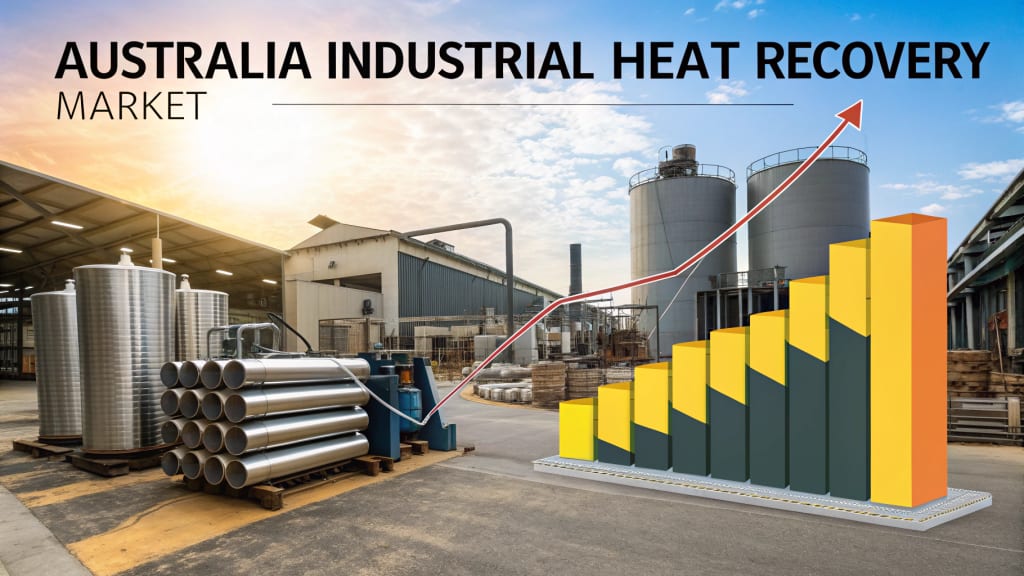
In 2024, the Australia industrial heat recovery market reached USD 48.7 million, and it is forecast to grow to USD 95.8 million by 2033, representing a compound annual growth rate (CAGR) of 7.8% over the 2025–2033 period. This growth trajectory reflects a robust industry response to rising energy costs, expanding mining and manufacturing activities, and increasing sustainability commitments from both public and private sector stakeholders seeking to optimise energy use and reduce operational expenditure.
Industrial heat recovery technologies capture waste heat from industrial processes and repurpose it for productive use — such as pre-heating, steam or electricity generation — thereby reducing energy demand and emissions. IMARC Group segments this market by technology (heat exchangers, waste heat recovery boilers, Organic Rankine Cycle (ORC) systems, regenerators and recuperators), application (power generation, cement, oil & gas refining, chemical & petrochemical, pulp & paper, food & beverage and others), and end-use sector (heavy industries, manufacturing & processing, utilities) — underlining broad industrial relevance and cross-sector demand.
Why the Market Is Growing So Rapidly
1. Rising Energy Prices Driving Operational Efficiency:
With electricity and fuel costs climbing, Australian industries are aggressively pursuing operational efficiencies. Waste heat recovery offers a cost-effective means to recapture energy that would otherwise be lost, reducing reliance on external power supplies and lowering utility overheads measured in millions of dollars annually.
2. Expansion of Mining and Heavy Industry:
Australia’s large mining sector — including mineral extraction and processing — generates significant waste heat during operations. Heat recovery technologies serve as energy optimisation tools in these energy-intensive environments, helping to improve resource efficiency and extend equipment life cycles.
3. Sustainability and Environmental Compliance:
Stricter environmental standards and corporate ESG targets are motivating manufacturers to adopt technologies that cut greenhouse gas emissions. Heat recovery systems help companies meet local emissions mandates while contributing to corporate sustainability reporting and climate goals.
4. Adoption Across Diverse Industrial Applications:
From cement production to oil & gas refining, heat recovery systems are increasingly integrated into high-temperature industrial processes. Industries such as chemicals, food & beverage and pulp & paper leverage these solutions to reduce energy waste and improve thermal efficiency across production cycles.
5. Technological Advancements and Tailored Solutions:
Improvements in heat exchanger design, Lean thermal technologies and Organic Rankine Cycle (ORC) systems increase the performance and deployment flexibility of heat recovery installations. These innovations enhance energy capture efficiency and reduce payback periods, making deployment more attractive even for mid-sized facilities.
What the Opportunities Are
1. Expanded Adoption in Manufacturing:
Manufacturers in sectors such as chemicals or metal fabrication can benefit from retrofitting heat recovery systems into existing processes to reduce energy intensity and operational costs over time.
2. Growth in Mining-Specific Solutions:
Tailored heat recovery systems for mining operations — especially remote sites with limited energy infrastructure — offer substantial value by optimising on-site energy resources and reducing logistics costs associated with fuel transport.
3. Technology Integration with IoT and Automation:
Smart sensors and IoT-enabled monitoring enhance system performance and predictive maintenance capabilities, increasing operational reliability and offering service-based revenue models for technology vendors.
4. Expansion into Renewable & Hybrid Energy Projects:
Heat recovery can complement renewable energy systems and hybrid power solutions, enhancing energy self-sufficiency while supporting broader decarbonisation goals in industrial campuses and utility grids.
5. Consultancy and Implementation Services:
Demand for planning, design and integration expertise — particularly for complex recovery technologies like ORC systems — creates opportunities for engineering consultancies and project developers.
6. Commercial and Institutional Retrofit Markets:
Beyond heavy industry, opportunities exist in commercial HVAC, food processing facilities and institutional campuses seeking cost reduction and sustainability improvements through heat reuse solutions.
7. Policy-Driven Incentive Programmes:
Government incentives promoting energy efficiency and carbon reduction can unlock additional funding and risk-sharing mechanisms, encouraging broader market adoption even among small and medium-sized enterprises.
Recent News & Developments in Australia Industrial Heat Recovery Market
• March 2025: Regulatory Action: Federal energy authorities updated energy efficiency incentive frameworks to include expanded rebates and tax measures for industrial waste heat recovery investments. These policies are designed to accelerate adoption across key manufacturing and processing sectors, reducing operational cost burdens while supporting national climate commitments.
• July 2025: Company Expansion: A major Australasian industrial engineering firm announced a new heat recovery solutions division based in Western Australia, aimed at servicing mining and heavy-industry clients with turnkey recovery system installations. Early project wins include two medium-sized metal fabrication plants projected to recover an estimated 15% of process heat through advanced recuperator technology.
• October 2025: Market Adoption Milestone: Industry analysts reported that industrial facilities across Queensland and South Australia have collectively installed over 30 MW of waste heat recovery capacity, marking a significant uptick in thermal efficiency investments catalysed by rising energy costs and performance benchmarking within the sector.
Why Should You Know About Australia Industrial Heat Recovery Market?
The Australia industrial heat recovery market reflects broader industrial transformation trends toward energy efficiency, emissions reduction and cost optimisation. With the market expected to nearly double from USD 48.7 million in 2024 to USD 95.8 million by 2033, this sector represents a growing niche for energy technology providers, engineering firms and sustainability-focused investors. Future growth will be driven by industrial process optimisation, climate regulatory alignment and rising operational cost pressures, making heat recovery technologies a strategic investment for long-term competitive advantage. For policymakers, supporting this market complements national energy goals and industry competitiveness. As industries seek to balance productivity with environmental accountability, heat recovery systems will play an increasingly central role in Australia’s industrial energy landscape.
About the Creator
Amélie Belle
Hi, I’m Amélie Belle—27, New York writer, lover of quiet moments and honest words. I share poetry and reflections on love, healing, and life’s small miracles. If my writing makes you feel seen, I’m exactly where I’m meant to be.
Keep reading
More stories from Amélie Belle and writers in Trader and other communities.
Australia Laboratory Centrifuge Market Expands with Rising Diagnostic and Research Demand
In 2024, the Australia laboratory centrifuge market was valued at approximately USD 50.1 million, and is expected to grow to USD 68.7 million by 2033, exhibiting a compound annual growth rate (CAGR) of 3.20% during the 2025–2033 period. This forecast underscores steady expansion driven by rising clinical testing demand, growing biotechnology research and continuous investment in advanced laboratory infrastructure across Australia. Laboratory centrifuges are fundamental tools in clinical diagnostics, biomedical research and pharmaceutical R&D — used for blood separation, molecular analysis and cell biology workflows.
By Amélie Belleabout 8 hours ago in Trader
Global Champagne Market Size Set to Reach USD 12.74 Billion by 2033 as Luxury Consumption and Premiumization Accelerate
Global Champagne Market Outlook The Global Champagne Market was valued at USD 7.72 billion in 2024 and is expected to reach USD 12.74 billion by 2033, expanding at a CAGR of 5.72% during the forecast period. This growth is being driven by rising luxury spending, premium gifting trends, and a surging demand for celebratory beverages in emerging economies, supported by strong brand prestige and evolving lifestyle patterns across Europe, North America, and Asia-Pacific.
By shibansh kumar3 days ago in Trader
Perfume Market: Trends, AI Innovation, and Transformative Impact on Marketing & Sales
Perfume Market Overview The global perfume market encompasses fragrances for personal use, including luxury, designer, niche, and mass-market products. Increasing global disposable income, growth in beauty consciousness, and expansion of online retail channels are major forces driving market growth. Perfumes are not merely functional products; they’re increasingly valued as expressions of identity and lifestyle.
By James Smitha day ago in Trader
Boundless
A geographical map could take you there. To the places I've been, to the sights I've seen, to the landscapes I've climbed. But no compass could point you in the direction of my memories. To the experiences I've lived, to the happiness I've felt, to the wonder I've held so close to my heart.
By Alyssa Musso4 days ago in Writers



Comments
There are no comments for this story
Be the first to respond and start the conversation.