Faizan Malik
Stories (18)
Filter by community
“I Built a Personality to Survive — Now I Don’t Know the Real Me” Subtitle: The cost of becoming
I don’t remember when I started pretending. I only remember getting very good at it. It wasn’t a dramatic decision. I didn’t wake up one day and choose to become someone else. It happened slowly — small adjustments, quiet edits, subtle shifts in tone and reaction. Like lowering the volume of a song until you forget how loud it used to be. I learned early that certain parts of me were inconvenient. Too sensitive. Too quiet. Too intense. Too emotional. So I edited. At school, I became agreeable. I laughed at jokes I didn’t find funny. I nodded at opinions I didn’t believe. I studied people carefully — what made them comfortable, what made them stay. I became fluent in being likable. At home, I became low-maintenance. I didn’t ask for much. I didn’t raise my voice. I didn’t express anger. I learned that peace was something you earned by shrinking. And it worked. People called me mature. Easygoing. Strong. Adaptable. I was praised for being calm, for being reliable, for never causing trouble. They didn’t see that I was disappearing. When you build a personality to survive, it feels smart at first. You become the version of yourself that gets rewarded. You smooth out your rough edges. You turn sharp emotions into softer responses. You translate your needs into silence. You survive. But survival is not the same as living. The longer you perform, the more the performance feels real. Eventually, you forget where the act ends and you begin. You become a collection of traits designed to keep you safe. I was the responsible one. The dependable one. The emotionally steady one. Those identities became my armor. If I was responsible, no one would worry about me. If I was dependable, no one would leave. If I was steady, no one would call me dramatic. But inside, there were storms I never allowed to reach the surface. One night, alone in my room, I asked myself a question that scared me: If no one was watching, who would I be? I didn’t have an answer. That terrified me more than rejection ever had. Because I could describe who I was in every room. With friends, I was the listener. At work, I was the overachiever. In relationships, I was the fixer. I adjusted myself constantly, like lighting in different spaces. But alone? Without roles? I felt blank. It’s exhausting to measure every reaction. To filter every thought before it leaves your mouth. To decide whether your real opinion will make someone uncomfortable. So you choose comfort. You choose acceptance. You choose safety. And slowly, you lose yourself. There’s grief in realizing that parts of you were never allowed to grow. The loud laughter you suppressed. The anger you swallowed. The dreams you dismissed because they didn’t fit your “reliable” image. I used to think I was adaptable. Now I wonder if I was just afraid. Afraid of rejection. Afraid of conflict. Afraid that the real me would be too much — or not enough. So I built a version that was just right. Just right for teachers. Just right for friends. Just right for expectations. The cost of becoming what everyone needed is forgetting what you need. When I finally slowed down enough to notice the cracks, they were everywhere. Moments of resentment over things I had agreed to. Laughter that felt disconnected from my own voice. The automatic “It’s fine” when it wasn’t. Those cracks were uncomfortable. But they were also proof that something real still existed underneath. Unlearning survival feels risky. Saying, “I don’t agree,” feels dangerous. Admitting, “That hurt me,” feels selfish. Prioritizing your comfort after years of prioritizing everyone else’s feels unfamiliar. The first time I said no without explaining myself, I felt guilty for hours. The first time I admitted I didn’t know who I was, I cried — not because I was weak, but because I was tired. Rebuilding yourself after surviving feels like walking without armor. You feel exposed. Vulnerable. Unsure which traits are truly yours and which were built for protection. Sometimes I still slip into old versions of myself. The agreeable one. The unbothered one. The always-okay one. It’s comfortable there. But comfort built on self-erasure isn’t peace. It’s hiding. I don’t hate the personality I built. It protected me. It helped me navigate spaces where I didn’t feel safe being fully seen. It kept me steady when I didn’t know how to stand on my own. But I don’t want it to be the only version of me anymore. Now, when I ask who I am, the answer is less polished but more honest. I am someone learning. Someone unmasking. Someone trying to separate survival skills from identity. Maybe I don’t need a perfectly defined “real me.” Maybe I just need permission to explore without editing. To laugh loudly. To disagree without apology. To feel deeply without shame. I built a personality to survive. It kept me safe. It kept me liked. It kept me functional. But now I want something more than survival. I want to exist without performing. And maybe the real me isn’t lost. Maybe they’ve just been waiting for me to stop pretending long enough to finally come home.
By Faizan Malik3 days ago in Motivation
The Loneliest People Are the Most Liked
I have 3,842 followers. And no one to call when my chest feels heavy at 11:47 p.m. It sounds dramatic when I say it out loud, which is probably why I don’t say it. Instead, I post. A photo. A joke. A thoughtful caption about growth. A filtered version of a life that looks full. People respond the way they always do — hearts, laughing emojis, “You’re glowing lately,” “Proud of you,” “You’re such a positive soul.” Positive. That word follows me everywhere. I learned early that people like warmth. They like the friend who listens more than they speak. The one who remembers birthdays. The one who shows up smiling, even when they arrived tired. So I became that person. Not because I was fake — but because it worked. Being liked feels a lot like being safe. When you’re liked, people clap for you. They invite you places. They tag you in things. They assume you’re doing well. And assumptions are comfortable. No one looks too closely at someone who seems fine. I seem fine. The loneliest people aren’t the quiet ones in the corner. Sometimes they’re the loudest laugh in the room. The ones who know how to carry a conversation. The ones who can make strangers feel seen. I know how to make people feel seen. I just don’t know how to let them see me. There’s a difference. When you’re the “strong” friend, the “funny” friend, the “put-together” one, you slowly become a role instead of a person. And roles don’t get comforted. They perform. At gatherings, I float between groups like I belong everywhere. I ask questions. I remember details. I make connections. I leave with new followers, new contacts, new proof that I’m socially successful. And then I go home and sit on the edge of my bed in complete silence. No notifications feel the same as conversation. No heart emoji replaces eye contact. No comment section replaces someone noticing that your voice sounded off. Sometimes I scroll through my own profile to understand why I feel so empty. The grid is curated. Balanced. Happy. There’s evidence of friendships, coffee dates, achievements, small adventures. If someone studied my page, they’d think I’m surrounded. Maybe that’s why I don’t reach out when I need help. Who would believe the person who always looks okay? There’s a strange pressure in being well-liked. You don’t want to disappoint the image people hold of you. You don’t want to be “too much.” You don’t want to shift from inspiring to overwhelming. So you swallow the heaviness. You reply, “I’m good!” automatically. You become efficient at redirecting conversations away from yourself. You tell yourself loneliness is dramatic. After all, you’re constantly interacting. Constantly visible. But visibility isn’t intimacy. And being known is not the same as being recognized. I remember one night in particular. I had just posted something vulnerable — but not too vulnerable. Carefully measured honesty. The kind that hints at depth but doesn’t expose the wound. It went viral. Messages poured in. “Thank you for saying this.” “You always articulate things so well.” “You’re so brave.” I stared at the screen and felt nothing. Because bravery would have been telling someone specific, “I’m not okay.” Bravery would have been admitting that I feel invisible even when I’m admired. But admiration is addictive. It fills the surface. It doesn’t reach the center. The loneliest people are often the most liked because they learned how to survive by being agreeable. Being helpful. Being impressive. They built connection skills before they built vulnerability skills. I know how to network. I don’t know how to need. There’s a fear underneath it — what if people like the version of me that doesn’t ask for anything? What if the moment I reveal the mess, the overthinking, the quiet sadness, the confusion… the likes fade? So I maintain. I keep conversations light. I keep problems private. I keep performing stability. And the world rewards me for it. But sometimes, late at night, I wonder what it would feel like to be deeply understood instead of widely appreciated. To have one person notice the pause before I say “I’m fine.” To have someone call without a reason. To sit in silence with another human and not feel the need to entertain. Loneliness isn’t always about physical isolation. It’s about emotional distance. It’s about realizing that many people enjoy you, but very few truly know you. And maybe that’s partly my fault. Being liked gave me control. If I’m useful, funny, inspiring — people stay. If I’m messy, confused, uncertain — that feels risky. But slowly, I’m learning something uncomfortable. Connection requires risk. The kind where you let someone see the unedited version. The kind where you say, “I don’t have it together.” The kind where you admit you don’t want advice — just presence. The first time I told a friend, “I’ve been feeling really alone,” my voice shook. It felt dramatic. Unnecessary. Embarrassing. She didn’t laugh. She didn’t minimize it. She said, “Why didn’t you tell me sooner?” I didn’t have an answer. Maybe because I was too busy being liked. Maybe because I confused applause with affection. Maybe because I thought needing someone would make me less admirable. But something shifted that night. A small crack in the performance. A small step away from being universally appreciated and slightly more personally known. I still have 3,842 followers. But now I also have one person who knows that sometimes, I sit on the edge of my bed and feel the weight of everything. And somehow, that one connection feels louder than all the notifications combined. The loneliest people are often the most liked. Not because they are fake. But because they learned how to shine in public and hide in private. I’m tired of hiding. I don’t want to be everyone’s favorite. I just want to be someone’s real.
By Faizan Malik3 days ago in Families
I Thought I Was Lazy — I Was Actually Burned Out
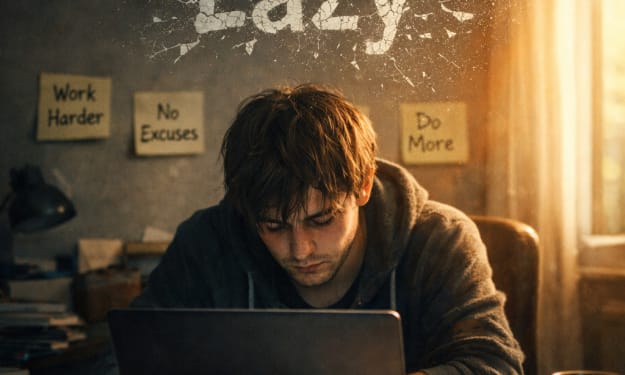
I didn’t hate working. I hated waking up. And for months, I thought that meant I was lazy. It started quietly. I stopped answering messages right away. I stared at my to-do list longer than I actually worked on it. I would open my laptop, read the same sentence three times, and still not understand it. Simple tasks felt like lifting furniture up a staircase alone. But instead of asking what was wrong, I asked, What’s wrong with me? I called myself undisciplined. Dramatic. Weak. I told myself other people were doing more with less sleep, less support, less time. I compared my worst days to everyone else’s highlight reels and decided I simply didn’t want success badly enough. So I tried harder. I downloaded productivity apps. I watched motivational videos at 2 AM. I wrote affirmations on sticky notes and placed them on my wall like little judges. “No excuses.” “Be consistent.” “Winners don’t quit.” Every morning I promised myself I would be better. Every night I went to bed feeling like I had failed. The strange thing about burnout is that it doesn’t look dramatic. There’s no visible collapse. You still show up. You still function. You still smile in conversations. But inside, everything feels heavy. Even breathing feels like effort. I stopped enjoying things I used to love. Music sounded like noise. Books felt like assignments. Conversations felt like performances I didn’t rehearse for. I wasn’t sad exactly — just tired in a way sleep couldn’t fix. But I didn’t know the word for it. Where I grew up, exhaustion was proof you were working hard. If you weren’t tired, you weren’t trying. If you rested, you risked falling behind. So when my body begged me to slow down, I translated it as weakness. Lazy people procrastinate because they don’t care. Burned-out people procrastinate because they care too much for too long without pause. I didn’t know that yet. Instead, I built shame around my slowness. I would sit at my desk frozen, unable to start, and whisper to myself, “Why can’t you just do it?” The worst part wasn’t the unfinished tasks. It was the self-disgust. The world is very kind to overachievers — until they break. For years, I had been the reliable one. The responsible one. The one who met deadlines and exceeded expectations. I didn’t notice that my identity was slowly attaching itself to performance. If I wasn’t producing, I felt invisible. So when my energy disappeared, it felt like my value disappeared too. I thought laziness meant not wanting to move. But what I felt was wanting to move and being unable to. I wanted to care. I wanted to be ambitious. I wanted to feel that spark again. Instead, everything felt like walking through water. One afternoon, I missed a deadline. Not because I forgot — but because I physically couldn’t make myself open the file. I sat there for hours, heart racing, staring at the screen. The guilt was louder than any alarm clock. That was the moment something shifted. Lazy people don’t cry over unfinished work. Lazy people don’t panic about not doing enough. Lazy people don’t lie awake at night planning how they’ll “fix themselves” tomorrow. Burned-out people do. Burnout isn’t loud. It doesn’t announce itself like a breakdown. It disguises itself as indifference. It whispers, “Maybe you’re just not built for this.” It convinces you the problem is your character, not your capacity. When I finally said the words — “I think I’m burned out” — it felt like exhaling after holding my breath for years. Burnout wasn’t about being incapable. It was about being overloaded. Too many expectations. Too much self-pressure. Too little rest. Too little compassion. I had been sprinting through life without noticing there was no finish line. Rest felt illegal at first. I would take a break and immediately feel anxious. I would close my laptop and feel guilty. I had trained myself to believe that slowing down was failure. But slowly, I started testing a new belief: Maybe exhaustion isn’t a flaw. Maybe it’s information. I began taking small pauses without earning them first. I let tasks sit unfinished without attaching my worth to them. I stopped glorifying “busy.” I stopped romanticizing overwork. It wasn’t dramatic healing. It was quiet permission. Permission to not be optimized. Permission to not be extraordinary. Permission to exist without constantly proving it. The hardest part was forgiving myself for all the names I had called myself. For the months I spent thinking I was defective. For the mornings I stared at my reflection and saw someone falling behind. I wasn’t falling behind. I was depleted. There’s a difference. Laziness says, “I don’t care.” Burnout says, “I can’t carry this anymore.” I cared too much for too long without refilling. Now, when I feel that familiar heaviness creeping back, I don’t reach for harsher discipline. I reach for gentleness. I ask what I’ve been carrying. I ask what I’ve been ignoring. I ask where I’ve been abandoning myself in the name of productivity. And sometimes, I just close the laptop. Not because I’m quitting. But because I’m choosing to stay. I thought I was lazy. I was actually tired of surviving my own expectations. And learning that difference might have saved me.
By Faizan Malik3 days ago in Education
My Reflection Blinked Before I Did
The first time it happened, I told myself I was tired. The second time, I stopped trusting my own eyes. It was late. Not the dramatic kind of late where the world feels haunted—just ordinary late. The kind where your room is quiet, your phone is charging, and your thoughts are louder than they should be. I stood in front of my bathroom mirror, brushing my teeth, half-awake and half somewhere else. I looked at myself the way I always do—quickly, carelessly. A glance, not a study. And then my reflection blinked. Before I did. It was subtle. So subtle I almost missed it. A fraction of a second. But I’m sure. I hadn’t blinked yet. My eyes were still open when the version of me in the mirror closed his. I froze. My first instinct was denial. I blinked deliberately this time, slowly. The reflection copied me perfectly. I tilted my head. It tilted too. I raised my hand. It followed. Normal. I leaned closer to the mirror. My heart was beating faster now, not from fear but from confusion. Maybe my brain had lagged. Maybe I blinked without realizing. Maybe exhaustion plays tricks. I turned off the light and went to bed. But sleep didn’t come easily. The next morning, I avoided the mirror. I washed my face without looking up. It felt ridiculous—being scared of glass. I laughed at myself in the kitchen. “You imagined it,” I whispered. “You’re just stressed.” All day, the thought followed me. Not like panic. More like a question I couldn’t answer. That night, I stood in front of the mirror again. I don’t know why. Maybe to prove something. Maybe to challenge it. The bathroom light hummed softly. My reflection stared back at me. Same messy hair. Same tired eyes. Same small scar near the eyebrow I got when I was twelve. We stood there, watching each other. I decided to blink first. Slowly. Deliberately. We blinked together. I exhaled. Then it happened again. Not a blink this time. A smile. A small one. Almost invisible. But it wasn’t mine. My face was neutral. I know it was. I felt my muscles still, relaxed. But in the mirror, the corners of my mouth twitched upward for just a second. It wasn’t a happy smile. It looked… knowing. My stomach dropped. I stepped back quickly. The reflection did too. Perfect synchronization, like nothing had happened. Like I had imagined it. “Stop,” I muttered to myself. I turned off the light and left, but something had shifted. Over the next few days, I started noticing tiny delays. Not always. Just sometimes. When I moved too quickly. When I wasn’t fully focused. It felt like my reflection was catching up instead of mirroring me instantly. Or maybe it was waiting. I stopped standing too close. I stopped staring too long. I covered the bathroom mirror with a towel one night, telling myself it was just temporary. But mirrors are everywhere. In my phone screen. In windows. In the dark surface of the TV. One evening, while my phone was black and locked, I saw my reflection staring back at me. I wasn’t looking directly at it—just holding the phone loosely. And then it blinked. I hadn’t. I dropped the phone. My breathing became shallow. My hands were shaking now. Not because I thought something supernatural was happening. But because something felt wrong inside me. It didn’t feel like a ghost. It felt like… me. Or a version of me. The more it happened, the more I started questioning something terrifying: What if it wasn’t the reflection acting first? What if I was the one lagging behind? The thought stuck with me. I began to notice how often I moved on autopilot. Smiling when I didn’t feel like it. Nodding in conversations I wasn’t fully present in. Saying “I’m fine” before checking if I actually was. What if the mirror wasn’t ahead of me? What if it was showing the truth before I allowed myself to feel it? The night everything changed, I stood in front of the mirror without fear. Just exhaustion. “Okay,” I whispered. “What do you want?” My reflection stared back. For a long moment, nothing happened. Then it blinked. Before I did. And this time, it didn’t copy my next movement. I lifted my hand slowly. The reflection didn’t. It stayed still. Watching me. My heart pounded so loudly I could hear it in my ears. My reflection’s eyes looked darker somehow. More focused. More aware. It wasn’t evil. It was calm. Calmer than me. Then it did something I wasn’t prepared for. It leaned closer. I hadn’t moved. It leaned closer to the glass, studying me the way I had studied it days ago. And then it spoke. Not with sound. With expression. A tired one. A disappointed one. Like it had been waiting for me to notice. Suddenly, something inside me cracked. I realized how long I had been ignoring myself. Ignoring stress. Ignoring fear. Ignoring the parts of me that needed attention. I had been performing so well for the outside world that I stopped checking in with the inside one. The mirror version wasn’t ahead of me. It was honest before I was. It blinked first because it wasn’t pretending. It smiled first because it knew things I refused to admit. Tears welled up in my eyes. And this time, when I blinked, it blinked with me. Perfectly. In sync. The reflection softened. The tension in its face disappeared. It mirrored me completely again—no delay, no independence. Just glass. Just me. I stood there for a long time after that. Nothing supernatural has happened since. No early blinks. No independent smiles. But sometimes, when I look at myself too quickly, I remember that feeling. And I slow down. Because maybe the scariest thing isn’t that your reflection moves first. Maybe it’s realizing that part of you has been awake the whole time—waiting for you to catch up.
By Faizan Malik13 days ago in Horror
I Deleted Social Media for 30 Days — Something Strange Happened”
I didn’t delete social media because I was strong. I deleted it because I was tired of feeling small. It wasn’t dramatic. No big announcement. No “digital detox” post for attention. Just a quiet Sunday night, my thumb hovering over the apps that had become muscle memory. Instagram. TikTok. Snapchat. Delete. Delete. Delete. Thirty days, I told myself. Just thirty days. The first morning felt wrong. I woke up and reached for my phone before my eyes were fully open. My thumb searched for colors that weren’t there. For a second, I felt panic — like I had lost something important. But there were no notifications. No red dots waiting for me. Just my lock screen staring back, silent. The silence was louder than I expected. The first week was the hardest. I didn’t realize how often I escaped into scrolling. Five minutes turned into an hour without noticing. Every small pause in my day used to be filled instantly — standing in line, sitting in the car, even brushing my teeth. Without social media, those moments stretched longer. Uncomfortable. Exposed. I felt bored. But underneath boredom was something else. Restlessness. I kept wondering what I was missing. What jokes were trending. Who posted what. Whether someone was thinking about me. It felt like I had stepped out of a room where everyone else was still laughing together. The strange thing is, after about ten days, something shifted. My thoughts got louder. Not in a scary way. Just… clearer. Without constant input, my brain didn’t know what to do at first. It tried to replay old conversations. Embarrassing memories. Things I said years ago. It was like my mind had been waiting for quiet to finally speak. And that’s when it happened. I started noticing how often I compared myself. Not because I saw someone else’s highlight reel — but because the habit was still inside me. Even without the apps, my brain automatically imagined what other people were doing. Who was ahead. Who was succeeding. Who was happier. It was like social media had moved into my head. That realization scared me. Deleting the apps didn’t delete the mindset. It just removed the distraction. By week two, the comparison slowly softened. I stopped thinking about what others were posting because I genuinely didn’t know. The invisible race I thought I was running began to feel… optional. Time started behaving differently. Evenings felt longer. I finished tasks faster. I read pages without reaching for my phone every few minutes. I noticed small things — the way light changed in my room at sunset, the sound of my own breathing when everything was quiet. It sounds simple. But it felt strange. One night, I sat alone without music, without a screen, just thinking. I realized I couldn’t remember the last time I had done that without feeling anxious. I expected loneliness. Instead, I felt something closer to relief. But the strangest thing wasn’t the quiet. It was how people reacted. Some friends didn’t notice at all. Some thought I was upset with them. A few said, “I wish I could do that,” like it was some extreme challenge instead of a small decision. It made me realize how deeply connected we all are to being visible. Without posting, I felt invisible at first. Like I had disappeared from the world. But after a while, I began to question something uncomfortable: Was I living for experiences — or for documenting them? There were moments during those thirty days when I instinctively wanted to take a picture. Not because the moment was beautiful, but because it would look beautiful online. When I couldn’t post it, something interesting happened. The moment stayed mine. No angle. No caption. No waiting for likes. Just me experiencing it. And that felt… different. Cleaner. By week three, my mood felt more stable. Fewer emotional spikes. Less subconscious pressure. I wasn’t constantly reacting to other people’s lives. I wasn’t absorbing hundreds of opinions before breakfast. My mind felt like it had space again. But here’s the strange part no one talks about: I started feeling scared to go back. Not because social media is evil. Not because it ruins everything. But because I had tasted what my mind felt like without constant noise. I liked who I was becoming in the quiet. I slept better. I woke up slower. I wasn’t measuring my mornings by notifications anymore. I wasn’t thinking about how I looked, how I sounded, how I compared. I was just existing. And existing without performance felt foreign. On day thirty, I stared at the download button. I expected excitement. Instead, I felt hesitation. Would I lose this calm? Would I fall back into the same habits? I realized something important: the strange thing that happened wasn’t supernatural. It wasn’t dramatic. It wasn’t that my life changed completely. It was that I met myself again. The version of me that thinks slowly. That doesn’t need validation to feel real. That doesn’t constantly check if someone else is doing better. Deleting social media didn’t fix my insecurities. But it showed me which ones were truly mine — and which ones were borrowed. That was the strange part. The noise wasn’t just outside. It had been shaping me quietly for years. Thirty days didn’t make me perfect. I still compare. I still scroll sometimes. I still care. But now I know what silence feels like. And once you hear your own thoughts clearly, it’s hard to pretend you don’t. Maybe the real question isn’t what happens when you delete social media. Maybe it’s what you’ve been avoiding hearing all along.
By Faizan Malik13 days ago in Lifehack
“Why ‘Just Try Harder’ Isn’t Real Advice”
Start wri“Just try harder.” Those three words followed me longer than any lesson I ever learned. They were said with good intentions. Teachers said them when I struggled. Family members said them when I looked tired. Friends said them when I felt stuck. It sounded simple, almost comforting—as if effort alone could untangle every problem. As if all failure was just laziness wearing a disguise. But no one ever explained how to try harder when you were already giving everything you had. I remember sitting at my desk long after midnight, eyes burning, mind numb, rereading the same page again and again. I wasn’t distracted. I wasn’t careless. I was exhausted. Still, when results didn’t match expectations, the conclusion was always the same: you didn’t try hard enough. That sentence slowly carved something into me. It taught me that struggle was a personal flaw. That if I couldn’t keep up, the problem wasn’t the system, the pressure, or the circumstances—it was me. “Just try harder” ignores context. It doesn’t ask about mental health, financial stress, learning differences, or burnout. It doesn’t ask if you’re carrying responsibilities no one sees. It assumes everyone starts from the same line, with the same resources, the same energy, the same safety net. They don’t. Some people are running uphill while others are on flat ground. Some are sprinting with invisible weights tied to their ankles. Telling them to “try harder” doesn’t make the path easier—it just makes the failure feel more personal. I believed that advice for years. I doubled down. I pushed through headaches, anxiety, and constant self-doubt. I learned to ignore my limits because limits were treated like excuses. Rest felt like weakness. Asking for help felt like admitting defeat. When I couldn’t meet expectations, shame filled the gaps. I started measuring my worth by how much pain I could tolerate. If I was exhausted, it meant I was working. If I was breaking down, it meant I wasn’t strong enough yet. The problem with “just try harder” is that it only works when effort is the missing piece. But often, effort isn’t the issue—direction is. Or support. Or time. Or healing. Sometimes people don’t need more pressure. They need understanding. They need tools, not commands. They need space to fail without being labeled a disappointment. I’ve seen people burn out not because they didn’t care, but because they cared too much. They tried harder every day until trying became all they were doing. Until their lives shrank to a cycle of effort and disappointment. And when they finally collapsed, the advice didn’t change. “Push through.” “Don’t give up.” “Everyone else can do it.” But everyone else isn’t living their life. This kind of advice also teaches us to silence ourselves. To ignore our own signals. Hunger, fatigue, anxiety—those become inconveniences instead of warnings. We stop listening to what our bodies and minds are telling us because we’re afraid of being seen as weak. I wish someone had told me that struggling doesn’t mean you’re failing. That needing rest doesn’t mean you’re lazy. That trying harder is not always the answer—sometimes trying differently is. Sometimes the bravest thing you can do is stop forcing yourself into a shape you were never meant to fit. Real advice asks questions. Real advice listens. Real advice adapts. It sounds like: What’s making this hard? It sounds like: What support do you need? It sounds like: Maybe the problem isn’t you. We live in a world obsessed with grit and hustle, but allergic to nuance. It’s easier to tell someone to push than to understand why they’re struggling. It’s easier to blame individuals than to fix broken systems. So we keep repeating the same phrase, hoping it works eventually. But words matter. And “just try harder” often does more harm than help. It turns pain into silence. It turns confusion into self-blame. It turns complex human experiences into simple moral failures. I’m learning to unlearn that voice in my head. The one that says rest is weakness. The one that says my best is never enough. The one that repeats advice that was never meant to heal. Trying matters. Effort matters. But so does compassion—for others and for yourself. Because sometimes, you’re not failing. You’re just human.ting...
By Faizan Malik16 days ago in Education
. “I Don’t Know Who I Am Without Achievement”
don’t know who I am when I’m not achieving something. Without a goal, a grade, a deadline, or a win, I feel like I disappear. I didn’t always notice it. For a long time, it felt normal—praised even. Teachers loved me because I performed well. Family members introduced me using my achievements instead of my name. “This is the one who always tops the class.” “This is the one who never wastes time.” I learned early that being valuable meant being impressive. Achievement became my language. If I didn’t know how to explain myself, I let results speak. A good score meant I was worthy of rest. A promotion meant I deserved happiness. Applause became proof that I existed. The problem was, no one ever asked who I was when the applause stopped. Every milestone felt like relief, not joy. I wasn’t celebrating—I was exhaling. Surviving. For a moment, I could finally stop running. But the silence never lasted long. Almost immediately, another question appeared: What’s next? And with it, the familiar anxiety. If I wasn’t climbing, I must be falling. If I wasn’t improving, I must be failing. So I kept moving. I filled my days with productivity and my nights with quiet fear. I stayed busy because stillness felt dangerous. In stillness, there were no metrics to protect me. No rankings. No feedback. Just me. And I didn’t know what to do with that version of myself. When people asked what I enjoyed, I panicked. Enjoyment felt unproductive. Useless. I didn’t know how to like something without being good at it. I didn’t know how to rest without guilt chasing me. Even hobbies turned into competitions with invisible finish lines. I measured my worth in output. If I produced, I was enough. If I didn’t, I wasn’t. Failure didn’t just hurt—it erased me. One bad result could undo years of effort in my mind. I didn’t see mistakes as part of learning; I saw them as proof that I was nothing without success. When things didn’t go well, I didn’t think, I failed. I thought, I am a failure. That belief followed me everywhere. In conversations, I felt the urge to justify my existence. To explain what I was working on. To show that I was still moving forward, still relevant, still worth listening to. Silence made me uncomfortable because silence didn’t showcase progress. Burnout arrived quietly. Not as exhaustion, but as numbness. Achievements stopped feeling real. Even the big ones felt hollow, like cardboard trophies. People congratulated me, and I smiled, but inside I was already afraid of losing the feeling they gave me. I was addicted to becoming, but I had no idea who I already was. The scariest moment wasn’t failure—it was success. Because after reaching something I’d chased for months or years, there was nothing left to distract me from the emptiness underneath. No goal to hide behind. No ladder to climb. Just a question I had avoided my whole life: Who am I if I stop proving myself? I didn’t know the answer. And maybe that’s the part no one prepares you for. School teaches you how to perform. Society teaches you how to compete. Social media teaches you how to compare. But no one teaches you how to exist without measurement. We grow up believing value is earned, not inherent. That love is conditional. That rest must be justified. So we build identities out of accomplishments and call it ambition. We wear exhaustion like a badge and call it discipline. But somewhere along the way, we lose ourselves. I’m learning—slowly, imperfectly—that I am more than what I achieve. That my worth doesn’t disappear on days when I do nothing. That I don’t have to be impressive to be human. Some days I believe it. Some days I don’t. Unlearning a lifetime of performance is hard. Sitting with myself without chasing validation feels uncomfortable, like standing in a room without mirrors. But I’m trying. I’m trying to find joy that doesn’t need to be shared. Rest that doesn’t need to be earned. A sense of self that doesn’t collapse when productivity stops. I don’t have a clean ending or a dramatic transformation. Just an honest truth: I’m still figuring out who I am without achievement. And maybe that’s okay. Maybe being lost isn’t failure. Maybe it’s the first time I’m actually being myself.
By Faizan Malik16 days ago in Motivation
My Phone Started Recording Me While I Slept”
I don’t remember giving my phone permission to record me. That’s the part that keeps me awake. I noticed it in the morning, half-asleep and reaching for my phone out of habit. A notification sat at the top of my screen, calm and ordinary. Sleep Session Saved — 6h 42m I don’t use sleep apps. I tapped it, expecting a glitch. Instead, a dark interface opened. A clean waveform. Timestamps. Everything looked intentional—professional, even. Recorded: 2:11 AM – 2:24 AM My stomach tightened. I pressed play. At first, it was just background noise. The refrigerator. Distant traffic. Then my breathing—slow, deep, unaware. Hearing yourself asleep feels wrong, like reading someone else’s private thoughts. I was about to close it when my breathing stopped. The silence stretched too long. Then I heard footsteps. Soft. Careful. Inside my apartment. I sat up so fast I felt dizzy. The recording continued. A faint creak near my bedroom door. Fabric brushing against something. Movement that sounded deliberate, restrained. Then a whisper, so close it distorted the audio. “He’s still asleep.” I dropped the phone. I checked every lock, every window. Nothing was disturbed. No signs of anyone being there. I tried to delete the app. It wouldn’t let me. When I held the icon down, there was no uninstall option. Just a line of text beneath it. Recording improves with familiarity. That night, I turned my phone off completely. I left it on the kitchen counter, face-down, disconnected. I still woke up at 3:00 AM to find it warm. Powered on. Another notification waiting. The next recording was worse. It started with a clicking sound—like a microphone being activated manually. Then a voice spoke. Calm. Clinical. Not mine. “Subject is restless tonight.” I heard myself shift in bed. “Increased awareness detected.” A pause. Then a soft laugh. “They always think it’s the phone.” I didn’t sleep after that. The recordings came every night. Longer. Clearer. Sometimes there were multiple voices. They talked about me like I wasn’t human—like I was data. Heart rate. Fear response. Attachment. One night, I heard myself speak. I don’t remember waking up, but there was my voice, quiet and empty. “Am I doing better?” I asked. “Yes,” one of them replied gently. “You’re learning.” That was when fear shifted into something worse. Familiarity. They started using my name. Mentioned memories I’d never shared online. Childhood moments. Private thoughts. Dreams I barely remembered myself. They knew me. On the final night, the app saved a video. I didn’t know my phone could record video with the screen off. The footage was grainy, green-tinted, like night vision. My bedroom, seen from the upper corner near the ceiling—an angle that shouldn’t exist. I watched myself sleeping. Then something stepped into frame. Tall. Indistinct. Its face never fully focused, like the camera refused to understand it. It leaned over my bed, studying me with something almost gentle. It reached out. Touched my forehead. In the video, my eyes opened. And I smiled. I woke up gasping. My phone buzzed immediately. Recording Complete — Integration Successful I don’t try to delete the app anymore. I don’t listen to the recordings. I barely sleep. But sometimes, late at night, when my phone grows warm in my hand, I feel calmer. Less alone. Like something is watching over me—learning me—handling things while I rest. And just before I drift off, I hear a whisper that doesn’t come from the phone. “Don’t worry. We’ll take over while you sleep.”
By Faizan Malik16 days ago in Horror
“Why Being ‘Strong’ Is Destroying a Generation”. AI-Generated.
I learned how to be strong before I learned how to ask for help. And by the time I realized those two things weren’t the same, I was already exhausted. We praise strength like it’s a cure-all. Be strong. Stay strong. You’re so strong—I don’t know how you do it. We say it at funerals. We say it after breakups. We say it to children who are learning too early that crying makes adults uncomfortable. Strength has become our favorite compliment and our most dangerous lie. Because no one ever explains what it costs. I grew up believing that being strong meant swallowing pain quietly. It meant not burdening others. It meant smiling through the worst moments because someone else always had it worse. Strength was silence. Strength was endurance. Strength was survival without witnesses. So I perfected it. When my world cracked, I didn’t scream. I didn’t collapse. I didn’t reach out. I showed up to work on time. I answered texts with “I’m good.” I posted photos where I looked fine. I carried my grief like a private weight strapped to my chest, invisible and crushing. People admired me for it. “You’re so strong,” they said, as if that settled everything. But strength, the way we define it, doesn’t heal you. It just teaches you how to bleed without making a mess. Somewhere along the line, we turned resilience into repression. We taught an entire generation that feeling deeply is a flaw and needing help is a failure. We turned coping into a performance and pain into something you manage quietly so it doesn’t inconvenience anyone else. We don’t tell people to rest. We tell them to push through. We don’t ask how they’re really doing. We accept “fine” and move on. We don’t sit with discomfort. We label it weakness and scroll past it. And the result? Burnout that looks like ambition. Anxiety that masquerades as productivity. Depression hiding behind jokes, overworking, and “I’m just tired.” We’re raising people who don’t know how to fall apart safely. People who can survive almost anything—except themselves. I’ve watched friends disappear slowly, not in dramatic ways, but in quiet ones. They became less expressive. Less present. Less alive. They mastered the art of functioning while numb. They wore strength like armor until they forgot how to take it off. And when they finally cracked, everyone was shocked. “But they were so strong.” That’s the problem. We confuse strength with the absence of visible pain. We trust people who don’t complain. We reward those who endure silently. We miss the warning signs because we’ve trained ourselves to admire them. Strength has become a trap. Especially for men, who are still taught that vulnerability is a liability. Especially for women, who are expected to carry emotional labor without collapsing. Especially for young people, who are navigating a world that demands resilience without offering support. We tell them to toughen up while the ground keeps shifting beneath their feet. Economic pressure. Social comparison. Constant visibility. Endless crises. The message is always the same: adapt, endure, keep going. No wonder so many feel like they’re failing at life while doing everything right. I used to think strength meant never breaking. Now I think it means knowing when you can’t hold yourself together alone. Real strength looks like admitting you’re overwhelmed before you’re destroyed by it. It looks like asking for help without apologizing. It looks like resting without earning it. It looks like saying, “I’m not okay,” and letting that be enough. But we don’t model that. We glorify hustle and stoicism. We romanticize struggle. We clap for survival stories and ignore the cost paid in private. We teach people how to push through pain—but not how to process it. So it stays. It settles in the body. It shows up as chronic stress, emotional distance, insomnia, anger that feels misplaced, sadness without a clear cause. It leaks into relationships. It shapes how we love, how we parent, how we treat ourselves. And then we wonder why so many feel empty, disconnected, and exhausted. This generation isn’t weak. It’s overburdened. It’s tired of carrying everything alone. Tired of being praised for strength when what it really needs is permission to be human. I don’t want to be strong anymore in the way I was taught. I don’t want to be admired for how much I can endure. I want to be supported for how honestly I can live. I want a world where we stop telling people to be strong and start asking what they need. Where we normalize softness alongside resilience. Where breaking isn’t a failure—it’s a signal. Where healing isn’t something you do quietly in the background while life keeps demanding more. Strength didn’t save me. Being seen did. And maybe that’s what this generation is really fighting for—not the right to be unbreakable, but the right to fall apart and be held instead of judged. If we keep teaching people to survive without support, we shouldn’t be surprised when survival feels like all they’re capable of. But if we redefine strength—if we make room for vulnerability, rest, and connection—we might finally raise a generation that doesn’t just endure life… …but actually lives it.
By Faizan Malik18 days ago in Humans
Every Night at 2:17 AM, Someone Knocks”. AI-Generated.
Every night at exactly 2:17 AM, someone knocks on my door. Not bangs. Not frantic pounding. Just three slow, deliberate knocks. Knock. Knock. Knock. The first night it happened, I assumed it was a mistake. Someone drunk. Someone lost. Someone who would eventually realize they had the wrong apartment and go away. I didn’t check the door. The second night, I checked the clock first. 2:17 AM. The knocks came seconds later, as if whoever was outside had been waiting for me to notice the time. I froze in bed, listening. My apartment was silent except for the low hum of the refrigerator and my own breathing. After the third knock, there was nothing. No footsteps walking away. No elevator ding. Just silence thick enough to press against my ears. By the third night, fear had settled in. I live alone on the fourth floor of an old building where sound carries strangely. Pipes groan like tired animals. The walls whisper when the wind is right. But this—this was different. This was intentional. Again, I checked the time. 2:17 AM. Again, three knocks. I forced myself out of bed and crept toward the door. I didn’t turn on the lights. I don’t know why—some instinct told me I shouldn’t let whoever was out there know I was awake. I peered through the peephole. The hallway was empty. No shadows. No movement. Just the flickering overhead light and the dull beige carpet stretching toward the stairwell. I laughed quietly, trying to convince myself I was imagining things. Sleep deprivation does strange things to the mind. Then I heard it. A soft sound. Breathing. Not mine. It was right outside the door. I stumbled back, heart hammering, every nerve screaming at me to lock myself in the bedroom. The breathing stopped the moment I moved, as if it knew I had heard it. That night, I didn’t sleep again. On the fourth night, I decided I wouldn’t let fear control me. I stayed awake. Sat on the couch with all the lights on. Coffee in one hand, phone in the other, door in my line of sight. Midnight passed. Then one. Then two. At 2:16 AM, my phone buzzed. I hadn’t set an alarm. The screen lit up with a notification from an app I don’t remember downloading. “It’s almost time.” Before I could delete it, the knocks came. Knock. Knock. Knock. My entire body went cold. I didn’t approach the door this time. I shouted instead. “Who is it?” No answer. “Go away,” I said, my voice shaking. “I’m calling the police.” Silence. Then, slowly, something pressed against the door from the other side. Not a hand. Not a fist. A forehead. I could see the faint indentation through the wood, the way the door bowed inward just slightly, as if whatever was out there was leaning its full weight against it. And then it spoke. Not loudly. Not clearly. Just enough. “You’re late.” The pressure vanished. Footsteps echoed down the hall—finally, real footsteps—and then nothing. The police found nothing. No fingerprints. No camera footage. No neighbors awake at that hour. They suggested stress. Anxiety. Hallucinations. I almost believed them. Almost. The knocks continued every night. Always at 2:17 AM. Sometimes there was breathing. Sometimes there was whispering. Once, I swear I heard my name spoken in my own voice. I stopped sleeping entirely. By the seventh night, I noticed something worse. My reflection had changed. Dark circles under my eyes deepened, but that wasn’t it. When I brushed my teeth that morning, my reflection blinked a fraction of a second after I did. I laughed it off. That night, the knocks came early. 2:16 AM. Knock. Knock. Knock. I didn’t check the door. Instead, I checked my phone. Another notification. “You were supposed to open it.” I don’t remember unlocking the door. I remember standing in front of it. I remember my hand on the handle, shaking. I remember thinking that whatever was out there had already been inside my apartment long before the knocking started. The door opened. The hallway was empty. But my apartment was not. I saw myself standing in the living room, barefoot, eyes hollow, smiling in a way I never had before. It spoke first. “Thank you,” it said. “I was getting tired of waiting outside.” The clock on the wall clicked over. 2:17 AM. I wake up every night now at that exact time. Not because someone knocks. But because I hear it knocking from inside the apartment—from behind my bedroom door. And every night, I knock back three times. Knock. Knock. Knock. Waiting for someone else to open it.
By Faizan Malik22 days ago in Criminal
The Town That Forgot Its Own Name
The Town That Forgot Its Own Name Names are fragile things. You think they’re carved into stone, etched forever in the hearts of those who use them daily, but one morning in the little town where I grew up, we all woke up to find ours was gone.
By Faizan Malik6 months ago in BookClub
I Found My Best Friend in the Most Unlikely Place
I Found My Best Friend in the Most Unlikely Place I met my best friend in the middle of one of the worst nights of my life — in an airport terminal at 2 a.m., stranded and exhausted, convinced the universe was against me.
By Faizan Malik8 months ago in Lifehack