Kyle Butler
Bio
Sharing fascinating facts and insights from every category, with a special passion for longevity and healthy living. Join me on a journey to discover the secrets of a longer, better life.
Stories (21)
Filter by community
The Inner Critic: Understanding the Psychology of Self-Talk. AI-Generated.
There is a voice most people hear every day, though few pause to examine it closely. It comments on mistakes, evaluates performance, predicts outcomes, and quietly narrates social interactions. Sometimes it encourages. Often it criticizes. This internal dialogue, commonly referred to as the inner critic, belongs to the subcategory of cognitive and self-psychology that explores self-talk and self-evaluation. Far from being random mental noise, the inner critic plays a central role in shaping identity, confidence, and emotional well-being.
By Kyle Butlerabout 16 hours ago in Psyche
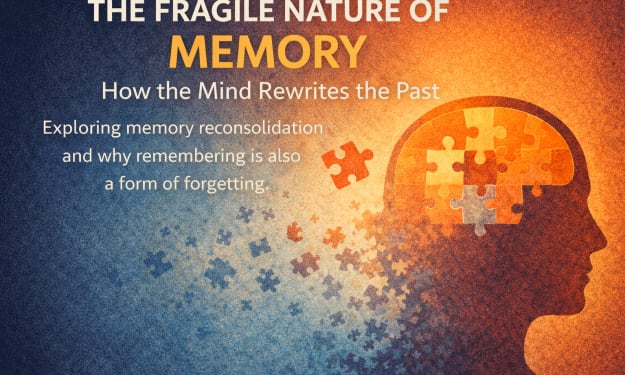
The Fragile Nature of Memory: How the Mind Rewrites the Past
We often view memory as a recording device. Something happens, and the brain stores it. Later, we recall it unchanged, like opening a file. Psychology presents a different picture. Memory is not fixed; it is fluid, reconstructive, and surprisingly fragile. One interesting aspect of cognitive psychology is memory reconsolidation, which is the process that alters our memories every time we recall them. This instability is not a flaw; it shows how our minds adapt, protect themselves, and reshape our identity over time.
By Kyle Butler18 days ago in Psyche
Decision Fatigue and the Hidden Cost of Constant Choice. AI-Generated.
Modern life is defined by choice. From the moment we wake up, we are faced with decisions: what to wear, what to eat, which messages to answer first, how to structure the day, what to buy, what to avoid. While choice is often framed as a form of freedom, psychology reveals a more complicated reality. Too many decisions, even small and seemingly harmless ones, can exhaust the mind. This phenomenon is known as decision fatigue, a subcategory of cognitive psychology that explores how repeated decision-making depletes mental energy and affects judgment, impulse control, and emotional regulation.
By Kyle Butler2 months ago in Psyche
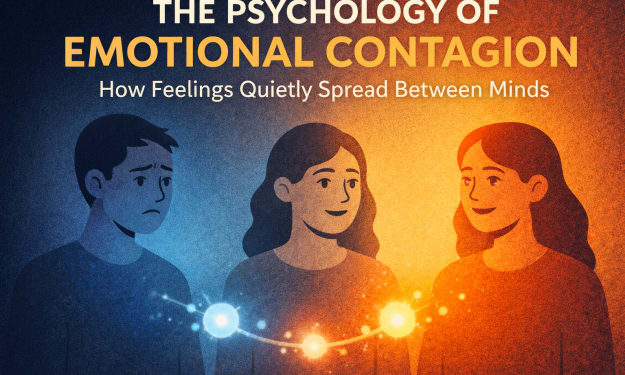
The Psychology of Emotional Contagion. AI-Generated.
Walk into a room where tension hangs in the air, and you may feel uneasy before anyone says a word. Enter a space filled with laughter, and your mood often lifts almost instantly. This phenomenon is not coincidence or imagination; it is emotional contagion at work. Emotional contagion is a subcategory of social psychology that explores how emotions transfer from one person to another, often unconsciously. It shapes group dynamics, relationships, workplaces, and even entire societies, influencing how we feel and behave in ways we rarely notice.
By Kyle Butler2 months ago in Psyche
The Emotional Echo: How Micro-Rejections Shape Our Inner World. AI-Generated.
Most people understand the sting of major rejection. A breakup, a job denial, a falling-out with a friend—these events leave marks that are easy to recognize. But psychology has begun paying increasing attention to something far quieter: micro-rejections. These are small, often fleeting moments of social dismissal that many of us overlook or brush aside. A text left unanswered, a slightly cold tone from someone we care about, a subtle exclusion from a group conversation, a joke that doesn’t land the way we hoped—it’s easy to dismiss these experiences as trivial. Yet they leave emotional echoes that can meaningfully influence our behavior, self-perception, and overall psychological health.
By Kyle Butler3 months ago in Psyche
The Quiet Power of Liminal Spaces: How Threshold Moments Shape the Psyche. AI-Generated.
Liminal spaces—moments, states, or environments where we stand between what was and what will be—have long fascinated psychologists, anthropologists, and storytellers alike. They occupy the hazy middle ground between known and unknown, certainty and ambiguity, identity and transformation. In the realm of psychology, liminality falls under the broader category of existential and developmental psychology, but it is a striking subcategory in its own right, touching on identity formation, emotional resilience, and the way we process change throughout our lives.
By Kyle Butler3 months ago in Psyche
The Hidden Clock in Our Cells: How Mitophagy May Hold the Key to Longer, Healthier Lives. AI-Generated.
The pursuit of longevity often brings to mind ideas like antioxidants, diet, exercise, or the latest miracle supplement. But beneath all these familiar concepts lies a lesser-known, incredibly important biological process that may shape how long and how well we live: mitophagy. This cellular housekeeping mechanism, responsible for identifying and clearing damaged mitochondria, plays an essential role in maintaining metabolic balance and supporting healthy aging. Though the word itself sounds esoteric, mitophagy is a crucial component in our biological quest to stay youthful, energetic, and resilient.
By Kyle Butler3 months ago in Longevity
The New Era of Longevity: How Science and Lifestyle Are Reshaping Our Lifespan. AI-Generated.
Longevity has become one of the most fascinating topics of our time. Once the realm of myth and speculation, the idea of significantly extending human life is now supported by real scientific progress, shifting cultural attitudes, and a growing movement focused on living not only longer but healthier. Today, longevity is no longer defined simply by the number of years lived, but by the quality, energy, and purpose that fill those years. As research advances and awareness spreads, more people are beginning to see extended healthspan as both achievable and worth striving for.
By Kyle Butler3 months ago in Longevity
Stronger for Longer: How Exercise Shapes the Path to Longevity
Introduction Few interventions are as consistently linked to longevity as physical activity. While genetics influence lifespan, lifestyle choices play a much bigger role in determining how long and how well we live. Exercise is often seen mainly as a way to manage weight or build muscle. However, it is one of the strongest tools for slowing biological aging. From protecting the heart to sharpening the mind, physical activity impacts every system in the body. For those looking to add both years and vitality to life, regular exercise is essential for healthy aging.
By Kyle Butler6 months ago in Longevity
The Power of Sleep in Extending Lifespan
Introduction When talking about the key factors for longevity, diet and exercise usually take the spotlight. However, sleep is one of the most overlooked elements that affects both the length and quality of life. The body’s nightly repair system does more than recharge energy; it involves vital processes that support cellular repair, hormonal balance, cognitive function, and immune health. In today's busy world, where being active is often praised and lack of sleep is seen as praiseworthy, many people forget how crucial quality sleep is for living longer and healthier. Understanding how sleep impacts aging and ways to improve it can be a valuable tool for anyone wanting to enjoy life more fully as they age.
By Kyle Butler6 months ago in Longevity
Eating for a Longer Life
Introduction When it comes to living a longer and healthier life, diet is one of the most influential factors. While genetics and environment play important roles, what we eat each day affects how our bodies age, how resilient we are against disease, and how much energy we have in later years. Around the world, communities where people regularly live past ninety share notable similarities in their dietary habits. These practices, though simple, form the basis of longevity. Instead of focusing on restrictive fads or temporary diets, their approach emphasizes balance, whole foods, and mindful eating. Understanding these principles provides a practical path to extending lifespan and improving daily life.
By Kyle Butler6 months ago in Longevity
Thriving Into the Future: The Art of Healthy Aging
Introduction In recent decades, conversations about health have shifted from short-term fixes to long-term strategies. People are no longer satisfied with just avoiding illness; they want to age well, stay active, and maintain their mental sharpness as they grow older. The concept of healthy aging includes physical strength, mental clarity, and emotional balance, contributing to a life that is not only longer but also more fulfilling.
By Kyle Butler6 months ago in Longevity