Valeriia Shulga
Stories (14)
Filter by community
Why Mobile Apps Break When They Start Growing (and How to Build Them So They Don’t). AI-Generated.
One of the quiet truths about mobile software is that scalability almost never hurts you at the beginning. Early versions of an app feel fast. Traffic is light, the backend is cooperative, and even questionable decisions don’t cause visible damage.
By Valeriia Shulgaabout 6 hours ago in 01
Design-to-Development Handoff: Why Projects Break After Design. AI-Generated.
If you've ever shipped a redesign that looked great in Figma and slightly… off in production, you've seen the handoff problem. It's rarely about talent. It's usually about the invisible gap between intent and implementation.
By Valeriia Shulga6 days ago in 01
ROI of Web Design Isn’t a Feeling: It’s a Trail of Evidence. AI-Generated.
If you want to talk about ROI without turning the conversation into “but the new version looks nicer,” you need one rule: design ROI is never measured at the design layer. It’s measured where money and time move.
By Valeriia Shulga8 days ago in 01
Fintech Web Design Is Not About Looking Good. AI-Generated.
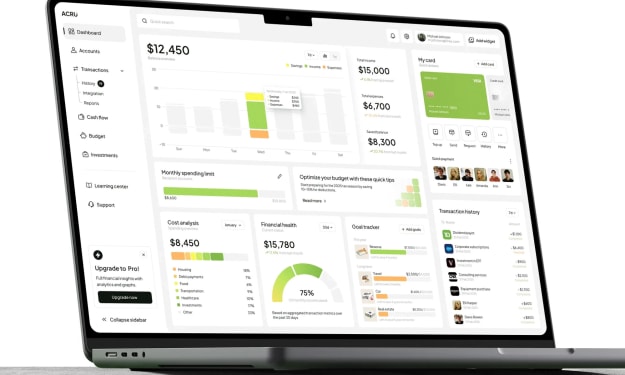
If you’ve ever built a fintech product, you know the website is not just marketing. It’s the first part of the product. That’s why teams that treat fintech sites like generic landing pages eventually end up rebuilding them. The constraints are different, the stakes are higher, and the expectations are less forgiving. You don’t design fintech like a portfolio site. You design it like infrastructure. That’s the mindset behind specialized approaches to fintech web design.
By Valeriia Shulga9 days ago in 01
Founder’s Guide to Web Design: What to Control (and What to Delegate). AI-Generated.
Most founders don’t set out to manage websites. Yet sooner or later, many of them find themselves approving layouts, rewriting homepage copy, or wondering why a “small change” has taken weeks. This usually happens when the website stops being a simple marketing artifact and turns into real business infrastructure. For companies operating in complex markets, especially those relying on B2B web design strategy, the website is no longer decoration. It is a system that shapes growth, perception, and revenue.
By Valeriia Shulga14 days ago in 01
Enterprise Web Design Is Not “Just More UX”. AI-Generated.
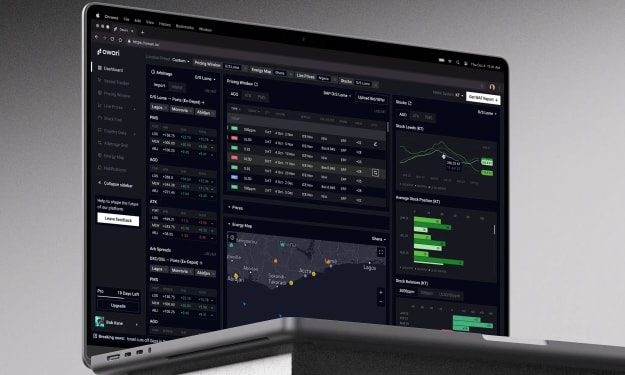
If you’ve ever worked on enterprise or AI-driven corporate platforms, you already know that applying standard web design practices to them is a category error. Designing at this level isn’t about polishing interfaces; it’s about building systems that people can safely rely on every day. That’s why teams moving into this space often discover—sometimes painfully—that the rules change the moment a product becomes operationally critical.
By Valeriia Shulga24 days ago in 01
Your Startup Website Will Break. The Only Question Is When. AI-Generated.
If you spend time around early-stage companies, you start to notice a pattern. The website is treated like a logo or a pitch deck: something you “get done” so you can move on to product, sales, and growth. It launches, it looks fine, it converts well enough, and nobody wants to touch it.
By Valeriia Shulga29 days ago in 01
How to Choose a Web Design Agency for Long-Term Product Growth. AI-Generated.
If you are looking at a site like a catalog of past work and thinking about hiring a web design agency for B2B and product teams, you are probably already past the phase where “making it look good” is the main problem.
By Valeriia Shulgaabout a month ago in 01
How to Choose a Cross-Platform App Development Framework in 2025. AI-Generated.
Anyone who has worked on a mobile product long enough eventually runs into the same question: Do we really want to build this twice? Once for iOS, once for Android, with two teams solving the same problems in slightly different ways.
By Valeriia Shulga2 months ago in 01
Front-End Technologies That Actually Matter in 2025. AI-Generated.
There’s a point in every digital product’s life where a sketch turns into something people can click. That’s the magic of front-end development. It’s what turns abstract design into a living, breathing interface—one that feels fast, looks great, and actually responds.
By Valeriia Shulga4 months ago in 01