courses
Tackle that seemingly endless selection of course offerings; a roundup of helpful resources and sound advice for selecting the best courses and acing them.
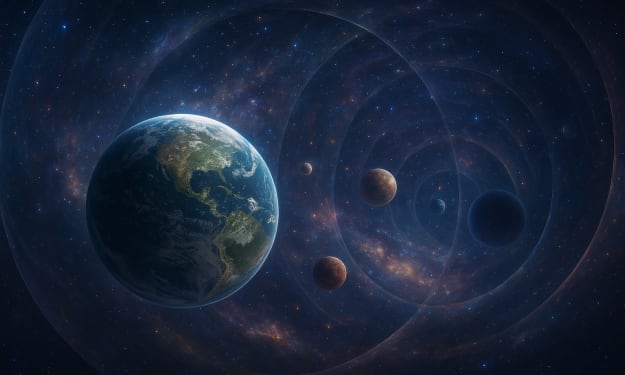
Why the Moon Appears Larger Near the Horizon
Is the Moon Really Bigger Near the Horizon? The short answer is no. The Moon’s physical size does not change during the night. In fact, when the Moon is near the horizon, it is actually slightly farther away from you than when it is overhead. That’s because when it’s overhead, you are about one Earth radius (roughly 6,371 kilometers) closer to it than when it’s on the horizon.
By shahkar jalal4 days ago in Education
What Causes Meteor Showers at Specific Times of Year?
What Is a Meteor Shower? A meteor shower occurs when Earth passes through a stream of debris left behind by a comet or, in some cases, an asteroid. As tiny particles of rock and dust enter Earth’s atmosphere at high speed, they burn up due to friction with air molecules. This creates bright streaks of light known as meteors.
By shahkar jalal4 days ago in Education
How Ancient Humans Used Stars to Navigate the Oceans
The Birth of Celestial Navigation Celestial navigation is the practice of determining position and direction using stars, the Sun, the Moon, and planets. For ancient mariners, the night sky was more than beautiful — it was a reliable map.
By shahkar jalal4 days ago in Education
Will Astronomy Guide Future Philosophy?
A Historical Bond Between Stars and Thought Astronomy has always guided philosophy. In ancient Greece, philosophers such as Aristotle and Plato grounded their metaphysical systems in cosmological models. The structure of the heavens influenced theories about perfection, motion, and causation.
By shahkar jalal5 days ago in Education
Is the Universe Enough? Science, Meaning, and the Search for Completeness
The Universe as Total Reality Scientifically speaking, the universe includes all space, time, matter, and energy. From the Big Bang to the formation of galaxies, from quantum particles to black holes, everything observable belongs to this cosmic system.
By shahkar jalal5 days ago in Education
Does the Universe Invite Exploration? Humanity’s Endless Call to the Cosmos
The First Invitation: Looking Up Long before space agencies and advanced observatories, ancient civilizations observed the stars. The night sky was not just decoration; it was a calendar, a compass, and a source of wonder.
By shahkar jalal5 days ago in Education
Can Cosmic Mystery Be Permanent? Exploring the Limits of Knowledge in an Expanding Universe
The Expanding Horizon of Discovery Throughout history, scientific progress has replaced uncertainty with explanation. Ancient civilizations looked at the sky and saw gods and omens. Later, scientific pioneers transformed those myths into measurable patterns. When Galileo Galilei used a telescope to observe Jupiter’s moons, he shattered centuries of assumption about Earth’s central place in the cosmos.
By shahkar jalal5 days ago in Education