literature
Geek literature from the New York Times or the recesses of online. Our favorite stories showcase geeks.
Book Review: "How We Love" by Clementine Ford
How We Love isn't a book about teaching you how to love, it isn't even a book about the correct way to love. It is a book that tells us the different ways in which love can impact our relationships with ourselves. Now, I may think romantic love is a representation of stupidity, but the way in which the writer describes the ideas of selflessness that is required for all types of love shows us that they possibly aren't all that different within us. She admits that she has made her own mistakes and she doesn't shy away from the difficult topics, and after a lengthy introduction in which we are introduced to the way in which the writer realised that loving boys wasn't worth the returns (and swiftly moved on to women instead) - we are met with the opening in which she talks of her mother's cancer and death.
By Annie Kapur7 days ago in Geeks
Book Review: "I Feel Bad About My Neck" by Nora Ephron
Back when I read The Most of Nora Ephron I complained about the fact that the ricotta omelette was absolutely terrible (it was, it was so disgusting I cannot believe she would eat that). But the book itself was absolutely hilarious. Universally female, funny and conversational - Nora Ephron didn't really hold back from showing us the frustrations and microaggresisons women experience every day. Even if that meant they were feeding it to themselves. I Feel Bad About My Next and Other Thoughts on Being a Woman is another one of these books where Nora Ephron takes us on a funny journey through the thoughts of womanhood.
By Annie Kapur8 days ago in Geeks
From Variants to Legacy
This idea didn’t come from a panel, a publisher, or a Comic-Con keynote. It came from a comment section. After I published my article about how comic shops don’t need more collectors but more readers, I came across a comment that quietly reframed the entire conversation. The commenter pointed out something that, in hindsight, feels almost obvious: libraries are often the genuine point of entry for new comic readers, not comic shops.
By Jenna Deedy9 days ago in Geeks
The Art of War
I bought The Art of War because I was angry. Not at the world. At myself. I was stuck in a job I secretly resented, constantly frustrated, constantly reactive. Every meeting felt like a battlefield. Every disagreement felt personal. I kept losing arguments — not out loud, but internally. I would replay conversations in my head at night, thinking of better comebacks I never said.
By John Smith9 days ago in Geeks
Book Review: "Call Them By Their True Names" by Rebecca Solnit
Rebecca Solnit previously wrote an incredible book called Recollections of My Non-Existence in which my review called it 'fantastic'. Solnit has a special talent for creating universality in her experiences through her incredible use of language. Articulate and yet, not overly verbose, charming without being saccharine, Rebecca Solnit is one of the best writers of our day and is bound to be remembered as a Joan Didion kind of figure in the future. A woman who's craft is as important as the story she writes. And there are very few more important stories to tell than what has been going down with our friends across the Atlantic for the past decade or so. Let us therefore, not mince our words. We should take these atrocities and call them by their true names...
By Annie Kapur9 days ago in Geeks
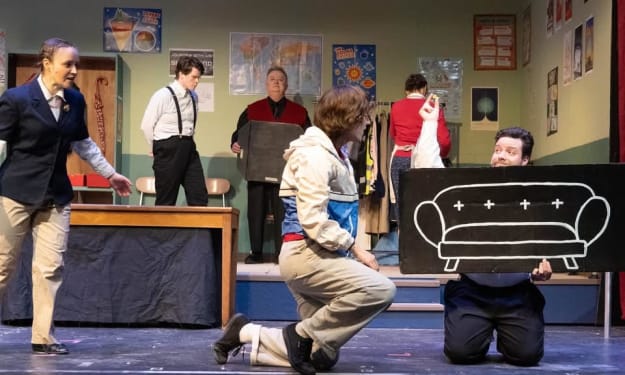
Concord Players' Powerful Rendition of "The Curious Incident"
Four red cars mean it will be a good day. Concord Players brings the pages of Mark Haddon’s novel, “The Curious Incident of the Dog in the Night-Time,” to the stage. Christopher Boone, a 15-year-old boy on the autism spectrum, investigates the murder of his neighbor’s dog. His sleuthing leads to uncovering serious discoveries about his own family.
By Marielle Sabbag10 days ago in Geeks
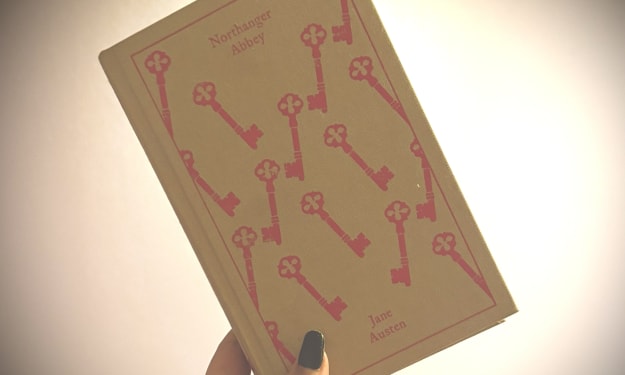
Rereading Review: "Northanger Abbey" by Jane Austen
I've decided to try out something called a 'rereading review' in which I will review now and again, a book I have read before. This usually consists of me reading the book again for some reason (usually because I really have an itch for it) and I promise, I won't just fill this up with rereading my favourite book (which I reread every few months anyway). And if you don't know what my favourite book is, then welcome to my page - you're clearly new here.
By Annie Kapur10 days ago in Geeks
Wuthering Heights Movie Review
Over a century after its release, Emily Bronte’s Wuthering Heights remains a classic of English literature; it has been adapted many times on the big screen, reaching across many cultures and filmmaking styles. The latest attempt goes for a modern approach and style, but it’s a rotten production from top to bottom.
By Robert Cain11 days ago in Geeks
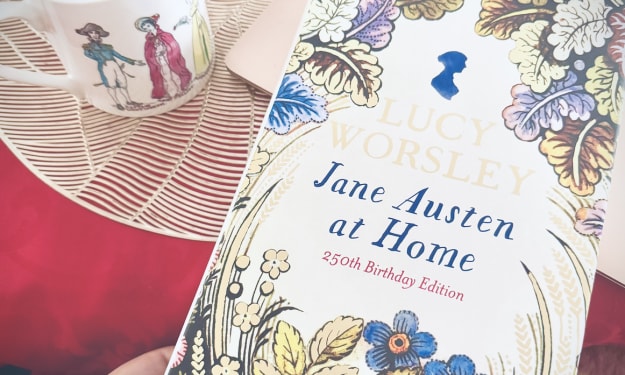
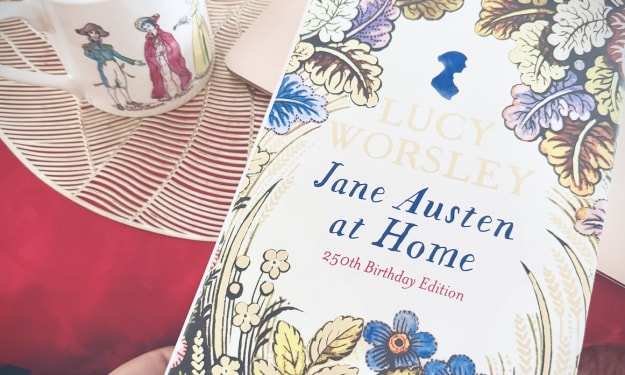
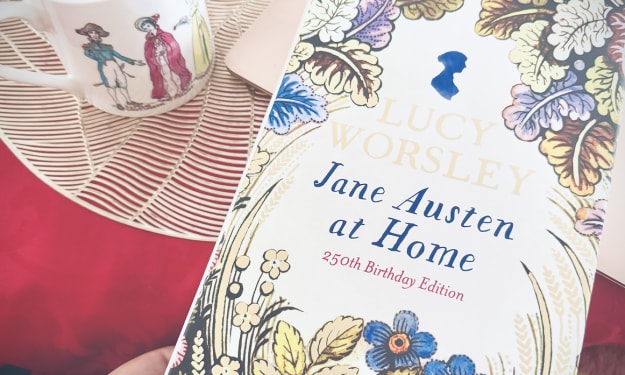
"Jane Austen at Home" by Lucy Worsley (Pt.4)
This review covers chapters 27 through to the end of the book, including the epilogue. *** The 'Great House', where which Jane would receive most of her education in grand houses, may have been part of the inspiration for her later writings like the incomplete Sanditon. But apart from this, we have the wit of Emma coming through. Lucy Worsley teaches us of the trepidations that came with publishing Emma and the expectation that it would be the best selling book yet. There was a lot of back and forths for Jane and her publisher, John Murray. She was starting to prove that, like her main character of Emma Woodhouse, she was capable of holding her own.
By Annie Kapur11 days ago in Geeks
Aurora Floyd by Mary Elizabeth Braddon
Temple Bar Magazine first published Aurora Floyd in serial form between the years 1862 and 1863. After that, it was released as a three-volumed novel and has been considered the most successful work of its writer, Mary Elizabeth Braddon after her sensational Lady Audley's Secret. Melodramatic and filled with domestic intrigue, the story captivated Victorian readers and contributed to those novels which often critique the models of sensibility, preached but not practiced, by the upper class.
By Annie Kapur12 days ago in Geeks
"Jane Austen at Home" by Lucy Worsley (Pt.3)
This review covers chapters 19 through to 26. *** As we continue through the story of Jane, Lucy Worsley gives us something to chew on. We get the story of the first writing of my personal favourite Austen novel, Northanger Abbey - originally entitled Susan. The 'chewing' is to decide exactly when it was being forged. There are known bursts of it in 1798 and 1799, but as the author states, there is certain inspiration from another book that wasn't published until 1801. It is a direct representation that though we may know much about Jane Austen's life from her letters, her everyday mapped out for us, her dislikes and likes seen clearly - we still don't really have the minutae of her writings. It is a bit here and there. Again, maybe this was done on purpose. Jane Austen was clever enough to keep those who didn't need to know in the dark about her actual intentions for the writings and when they were held out.
By Annie Kapur12 days ago in Geeks
Book Review: "Jane Austen at Home" by Lucy Worsley (Pt.2)
This review covers chapters 10 through to 18. *** Chapter 10, entitled 'Novels' covers Jane's written beginnings. We get to see inside the first formations of the novel that would become Sense and Sensibility and how, in installments, she would read it per evening to her family. These were novels written in letters, which were not in fashion and had not been for decades. I'm quite surprised and filled with joy that such an incredible woman existed in a place where more than often, extra-curricular activities outside that of being a wife and mother were not considered very important. However, her father thought them important enough to buy his daughter a writing desk with many drawers. This single act of encouragement was definitely a play to make sure his daughter continued to show her passions - a man clearly ahead of his time and fond of his daughters.
By Annie Kapur13 days ago in Geeks